Q - Hello Jessica. Can you please tell us a little about yourself, where you live and your substack publication?
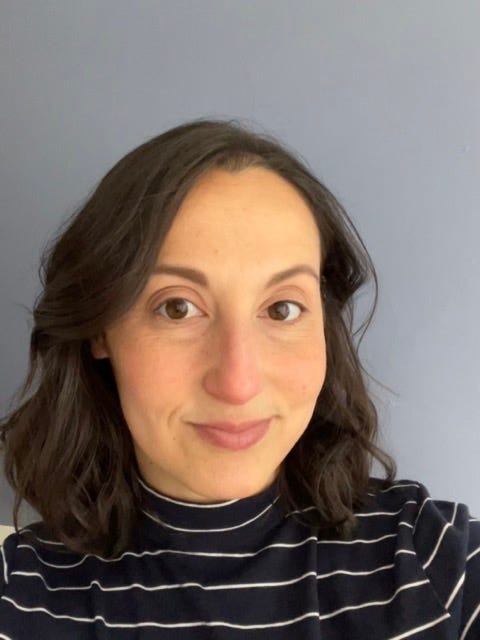
A -I tend to think of myself as a culinary polyglot, in the sense that I’ve learned to think, write, and talk about food across a ton of different audiences in what feels like a very short time. My Substack, French Fries & Martinis, reflects that–sometimes I’m nerding out on food history, sometimes I’m ruminating on cookbooks, sometimes sharing observations from my time in the museum world. I’m a former cookbook editor (at Penguin Random House for 8 years, first at Alfred A. Knopf and then at Clarkson Potter), a museum staffer (with the food history team at the Smithsonian’s National Museum of American History), and then a doctoral student in American Studies (where I finished my degree in 2024, on public culinary pedagogy in 20th century American media and culture.) But even with these disparate experiences, I’d like to think that the Substack brings it all together into a semi-coherent whole. I’ve also used the Substack as a never-ending writing portfolio, which has served me well while I’ve been building a freelance writing career at Serious Eats, The Boston Globe, and most often at SAVEUR, where I’m a contributing editor of books coverage. I’m also currently teaching a course on writing cookbooks for the Gastronomy Program at Boston University, which is (in my biased opinion) just about the best place to find classes that really get to the heart of what it means to work in the food world. When I’m not cooking, writing, editing, or teaching, I’m hanging with my husband and 5yo kid just outside of Boston.
Q - Can you please describe the layout of your kitchen, how much of a role does it play with your family, when writing for your publication ‘French Fries and Martinis'.

A - My kitchen is not nearly as big as I’d like it to be, but it’s far bigger than others I’ve experienced. (That one was in a studio apartment in a former Victorian mansion, where I cobbled together three Ikea bureaus to make a kitchen counter.) As my husband and I currently both work from home, we’re cooking or assembling ingredients for almost every meal, usually prepping on about 2 feet of open counter space between the windows and the kitchen sink. Beyond that we’ve got a coffee pot, a microwave, and a gas stove, with a handful of must-have appliances stashed in our pantry. It’s pretty basic, but it gets the job done.

Q What are your most used kitchen gadgets and kitchen gear, that you cannot live without?
A - Cooking from cookbooks has made me very appliance (and trend)-adverse–I don’t even remember if we had a microwave in my house growing up, that’s how old-school I am. So I’m a huge proponent of the lifelong pantry–stainless steel skillets that have been used a million times, a whole bunch of paring knives, and tomato sauce cans stuffed full of wooden and steel utensils. My indispensable items are probably my Wusthof chef’s knife, silicone spatulas in different sizes, and my Dutch ovens (3 sizes). I’m also a sucker for vintage cookware, both for the aesthetics and the quality of the production. During the pandemic I bought a small Dansk Købenstyle pot that is the perfect size for steaming vegetables, and after finishing my PhD my former Smithsonian boss gifted me a gorgeous Le Creuset pot shaped like a yellow bell pepper. It makes me feel so good every time I use it, no matter what I’m cooking.
Q - How would you describe the regional cuisine where you live? Are there fresh food markets, or farmers markets available?
A - I’m so conflicted about the greater New England food scene. On the one hand, a lot of the well-known restaurants in Boston are incredibly patrician–clinging so tightly to the seafood and Yankee fare tradition that you’d think there wasn’t any room for improvement. But on the other hand, greater Boston has some of the most eclectic restaurant offerings of any major city, and if you know where to go, you can find exceptionally great food. There are vibrant diasporic communities all across greater Boston–from China, Brazil, the Caribbean, Vietnam, El Salvador–and though the restaurant “scene” doesn’t always feature it, many people make their livelihoods by sharing their culinary gifts with their neighbors. I live pretty close to Watertown, which has the third largest Armenian population of anywhere in the US, and features an exceptional array of great Armenian, Turkish, Greek, and Lebanese restaurants and markets. So when I think about Boston’s “regional cuisine,” I don’t think lobsters and baked beans; I think za’atar manakish, soup dumplings, fried plantains, and the best Greek yogurt on the planet.
Q - Is there anything about your kitchen that you would like to change or improve on?
A - I know many people dream of a secret room in their homes where they could suddenly store all their extra stuff. I’d love to create a culinary version of Cher’s closet from Clueless–one with rotating shelving that displays all the ingredients and the batterie de cuisine at a moment’s notice. But barring that innovation, I’d love to have a large enough kitchen for a giant butcher block for prep right in the center…which would require about 15 additional square feet in the room. Ah well.
Q What tips can you give us that will help keep our kitchens neat and tidy and easy to manage.
A - This isn’t particularly novel, but clean as you go. I love the feeling at the end of a night where the only things that still need to be washed are the dinner plates. Also, don’t buy gadgets, especially single-use ones. Unless you can name at least five things that a gadget can do that a regular knife or pan can’t, it’s probably not worth the space in your kitchen. (Despite having a lovely stand mixer, I default to my hand mixer almost every time; it’s just so much easier to retrieve and clean.) If I have any trendy cooking tip, it’s doing mise-en-place in silicone cupcake baking cups; they store compactly, can be easily turned inside out to get every last ingredient out, and are a breeze to clean, that I don’t feel bad about using a whole bunch to test recipes.
Q How many cookbooks do you have and do you have any favourites? Have you written any cookbooks?
A - Re: my current hardcopy collection, I probably have at least 80 books. (This doesn’t seem like a lot compared to some other culinary folks, but when the average home cook probably owns 10-15 titles max, it feels decadent to me. There are cookbooks in almost every room of our house, and I have at least a hundred more titles on my computer as PDFs–ah, the glories of cookbook review coverage.) I tend to dip in and out of cookbooks for inspiration, rather than using them on a daily basis, but if I had to pick favorites, my top three would probably be Sunday Suppers at Lucques by Suzanne Goin (I’ve probably cooked through at least half of it), Eat Me by Kenny Shopsin (my all-time favorite place to eat in New York), and The Flavor Bible (for how it empowers me to think about recipes that don’t exist yet). But that doesn’t even begin to touch the cookbooks I love to read–I really love how Molly Yeh and Deb Perelman both write about home cooking, and my current obsession is Jody Eddy’s Elysian Kitchens, which got me thinking about the relationship between food and faith in an entirely new way. And I could read Peg Bracken and Edna Lewis almost any day of the week; they’re just the best. (I co-wrote a cookbook back in 2016 on maple syrup, and I do have a few cookbook ideas up my sleeve. But I like co-authoring and editing much more than writing solo, because I love collaboration.)
Q As a former cookbook editor, can you please tell us what you look for in a new author, and about some of the cookbooks you have been involved in?
A - Because I was trained as an editor by Judith Jones (a legend in the cookbook world, who edited countless iconic texts, including those from Julia Child, Marcella Hazan, Joan Nathan, Madhur Jaffrey, and many others), I’m always driven first and foremost by voice. Many of us can cook, and that’s wonderful, but the ability to write clearly and beautifully about food–especially about food as it connects to culture, tradition, and history–is far more rare than we think. When I was acquiring books, I always thought about my authors as storytellers and curators: how could they lead us from place to place, idea to idea, via a recipe? Some of my authors were masters at framing an entire culinary culture through dishes. Others had distinctively fun, smart voices that could convince you to cook just about anything, even if it was way outside your comfort zone. When I’m looking at potential titles for SAVEUR coverage, I’m thinking of the same criteria: who is writing a book that is as rich to read as it is to cook from? In an age where we can access millions of recipes at a single click, it’s voice and perspective that sets culinary authorities apart from the content generators.
Q Do you have a favourite recipe that you would like to share with us?
A - I mostly cook without recipes (unless I’m recipe testing from books I might write about), and I rarely write down what I’ve invented on my own. But there’s one exception to that: for the last decade or so, our annual Passover feast takes a different geographic/cultural focus each time, filtering the classic seder dishes–roast lamb, sweetened carrots, bitter greens–through a global culinary lens, and I’ve been meticulous about saving those recipes. There may been many fantastic meals from this process, but probably my best came from the year of Indian Passover, where I made a spinach salad inspired by saag paneer, with big toasted pieces of paneer and chopped almonds, fried shallots, and a dressing full of ginger, cumin, turmeric, and mustard seeds. It’s unbelievably good. On the baking side of things, I’m a total amateur (and a big evangelist for pre-made pie dough), but my secret dessert flex is buttermilk tart, which is one of the “desperation” desserts that came out of the American South during the Depression and World War II. It’s like a creme brulee in pie form, and so simple–beat 3 eggs with 1 stick melted butter, 1 1⁄2 cups sugar, and 3 tablespoons flour, then beat in 1 cup of buttermilk, 1 tablespoon lemon juice, and 1 teaspoon vanilla extract. Pour into a tart shell and bake at 375 F for 30-60 minutes, until the center is firm and a bit crackly on top. Serve with blackberries and raspberries, and people will be clamoring for more.
Q Have you had any kitchen disasters that you can share with us?
A - My biggest kitchen screwup ever was the first meal I ever made solo. I was probably 13 or 14 years old, and my little sister and I decided to make our parents dinner for the night. She chose a Duncan Hines boxed cake mix, and I chose a pasta with roasted red pepper and garlic–easy enough, I thought. Unfortunately, I didn’t know what a “clove” of garlic was, and so when the recipe asked for “two cloves,” I mistakenly added two heads. (Yes, I thought something was off, but when garlic was in the title of the recipe, I assumed it was supposed to be a dominant flavor!) Let’s just say we ate the cake for dinner…
Thank you for sharing your kitchen with us . Visit and subscribe to ‘French Fries and Martinis’.
Comments
Post a Comment