Q. Hello Kate. Can you please tell us a little about yourself, where you live and your substack publication?
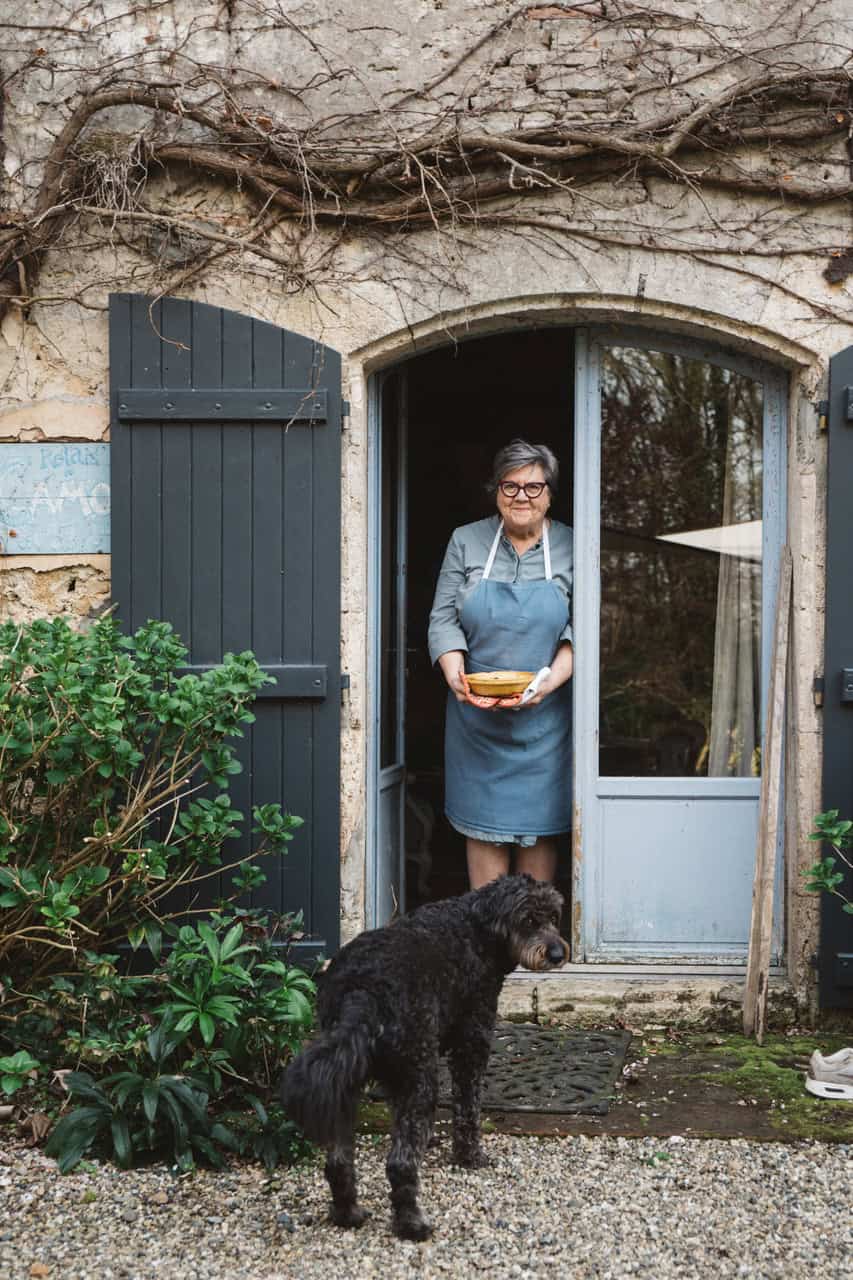
Kate with Chica at Kate’s French Farmhouse in The Camont.
A. I live in a 300-year-old French farmhouse, Camont, in a quiet rural farming area of Southwest France near Agen, halfway between Bordeaux and Toulouse. I’ve lived here half my life, cooking, teaching cooking, and writing cookbooks. Now, at 72, I really feel settled into this house and garden that I created after years of traveling and adventuring. I write on Substack under the banner of The Camont Journals.
Q. Can you please describe the layout of your kitchen, how much of a role does it play with your family, when writing for your substack publication ‘ The Camont Journals’
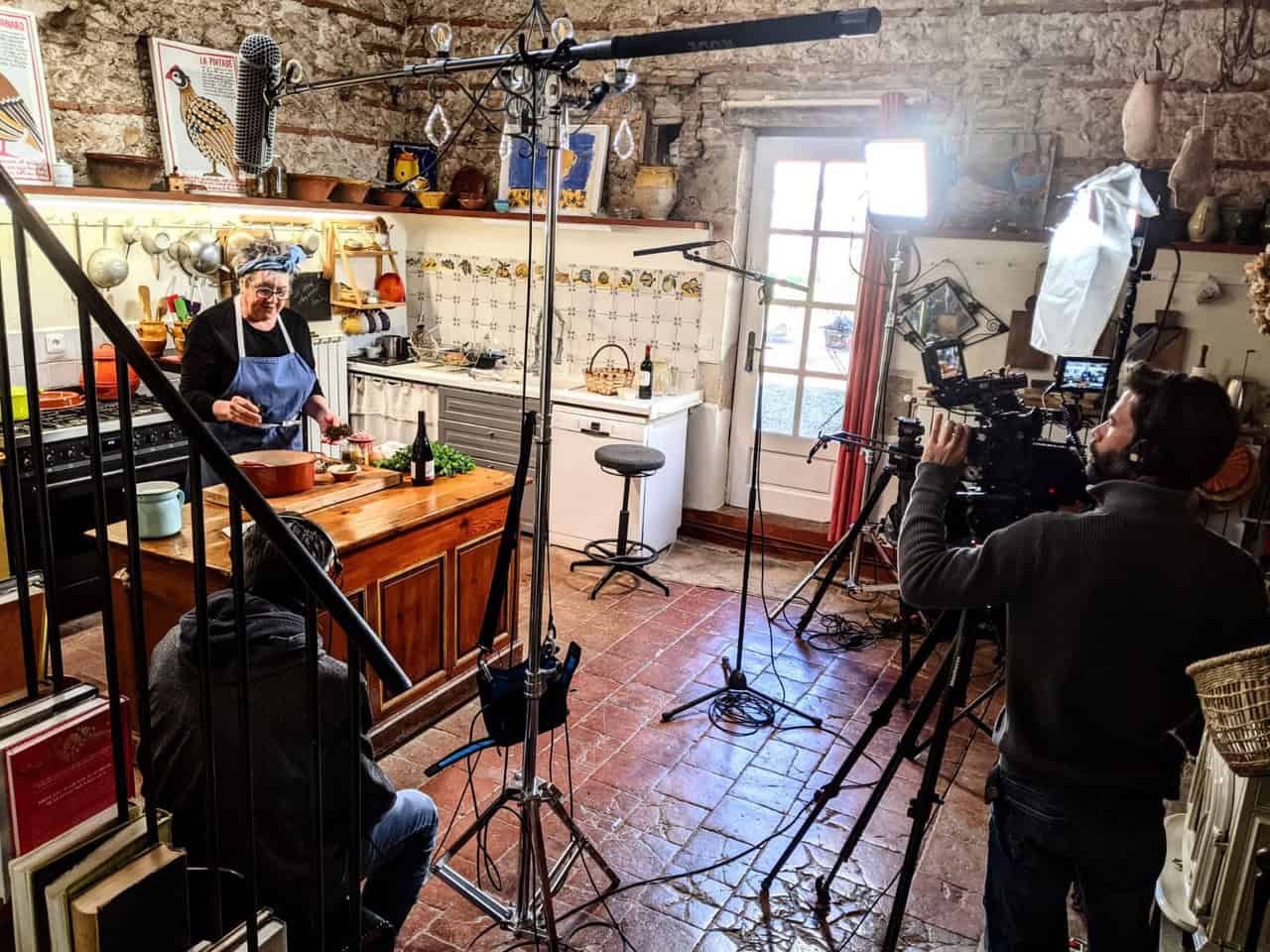
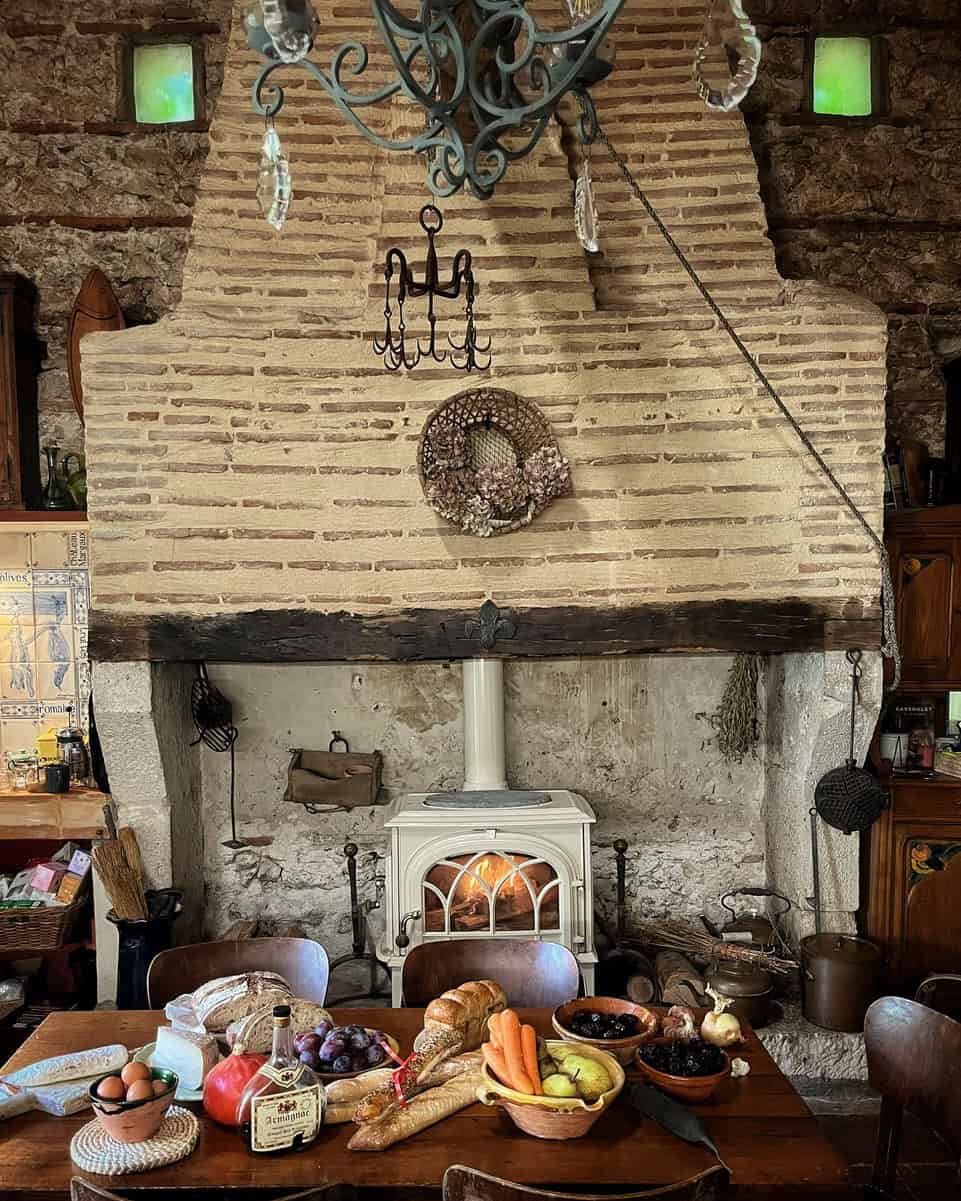
A. Today’s Camont is a rambling layout of three old farm buildings: the pigeonnier (or dovecot), the piggery, and the barn. When I bought her in 1989, there was no roof over what would become the kitchen and wheelbarrows full of roof tiles, rafters, and rubble. Over the next few years, I transformed this ruin into a 300 sq. kitchen with the original 7-foot wide chimney taking up nearly one whole wall. I began offering suppers and cooking classes in this space as soon as possible before there was even electricity or running water. While I later built a larger teaching and butchering kitchen in the barn, this original cooking space is the signature kitchen for the Camont Journals and any videos or photographs I do to illustrate cooks, articles, and The Camont Journals. The light is wonderful!
French TV crew filming
I use my kitchen as a tv studio occasionally and where I filmed many cooking videos during covid.
Q. What are your most used kitchen gadgets that you cannot live without?
A. A whisk. A bench or pastry scraper. And my small French tapered rolling pin. I keep everything handy at arm’s reach on an antique butcher’s hooks.
Q. In Sept 2023, you began writing a series of posts called ‘Finding France: A Culinary Journey to Gascony’ in what you describe as ‘a book of seasons’. Could you share some insights about this series and the inspirations behind them?
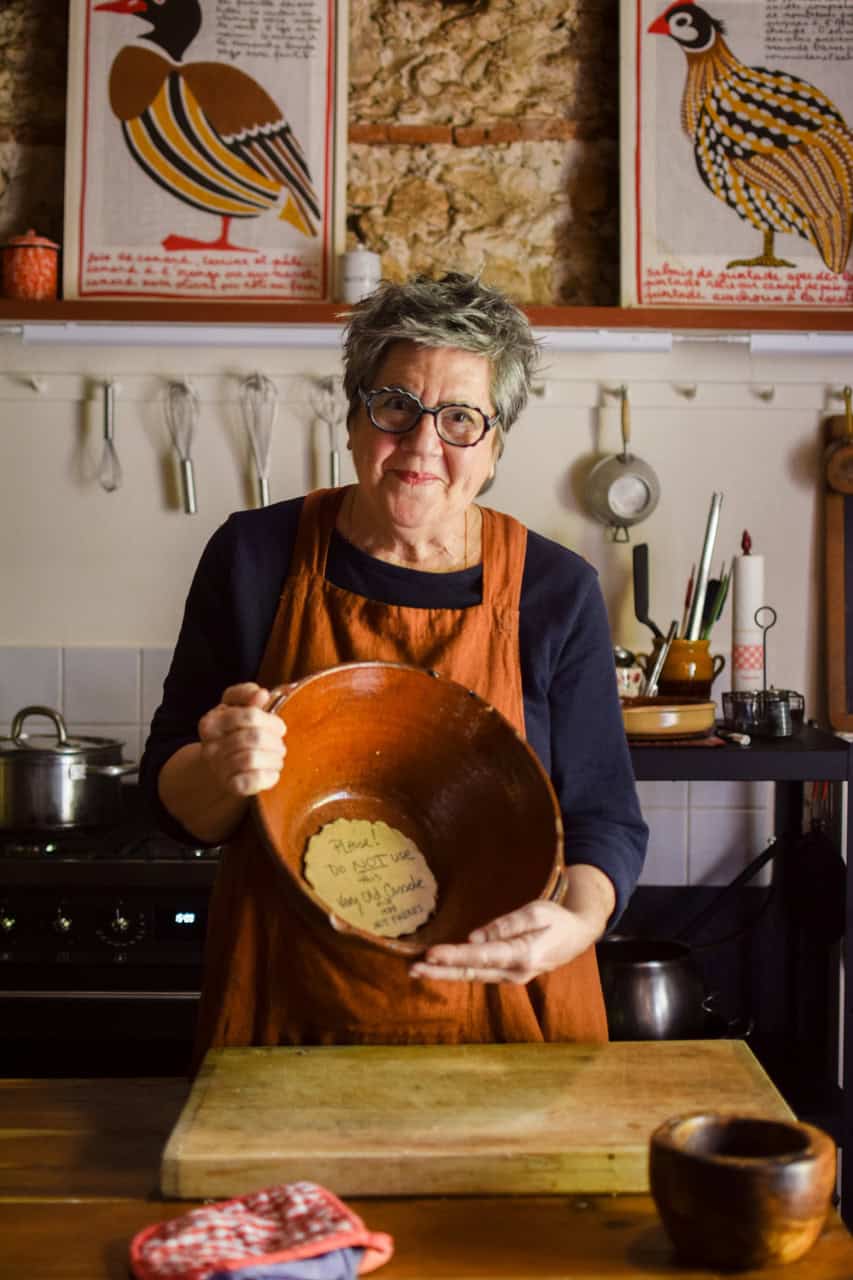
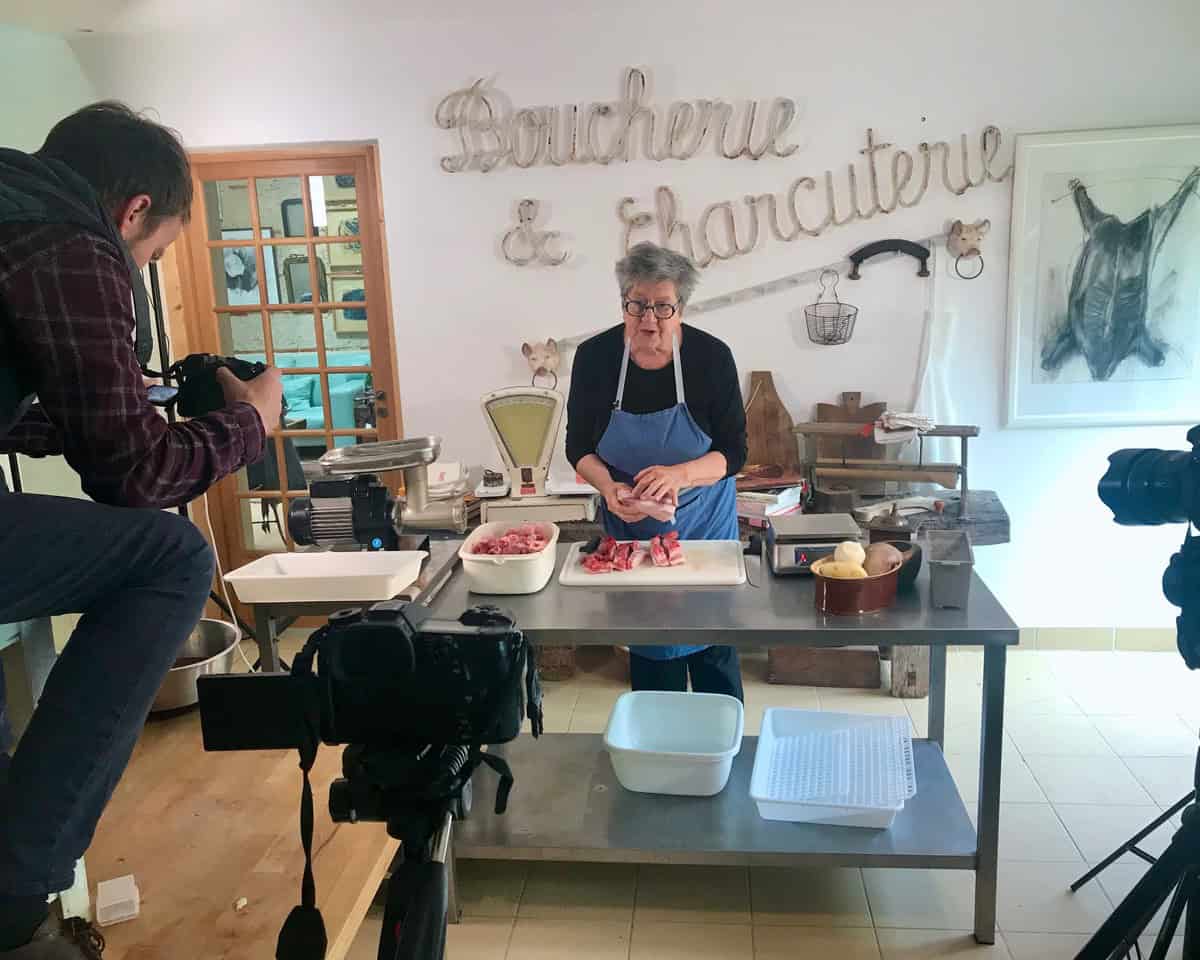
Kate in the second Kitchen at Camont.
A. Having published a few previous books, including my first one (1995) A Culinary Journey In Gascony, I wrote my serialized book “Finding France: A Memoir in Small Bites” on Substack between Sept 2023-Aug 2024. I wanted to tell the stories of how I learned to cook in France over the years, from novice chef to experienced teacher. Anecdotes and generous mentors feature alongside my favorite recipes that illustrate my journey.
Q. You also run a writer’s residency. Can you tell us something about that? Do you hold these residences in your kitchen and home? What inspired you to set up these events?
Photo credit Kate Hill
A. Post-COVID and the restrictive travel lockdowns, I took the opportunity to hang up my apron, throw in the tea towel, and retire from teaching cooking and butchery. I wanted to write more and started my Substack in April 2021. However, with a now vast complex with five bedrooms/five bathrooms, two kitchens, two sitting rooms, and dining room, etc, to maintain, I looked for a way to pursue my own writing work, surround myself with other creative spirits and keep the bills paid. Since the pigeonnier was already separated from the newer renovated barn and my living quarters, I dedicated that three-bedroom space with the original 18th-century style kitchen and sitting room to the creative residents who come to stay at the Relais de Camont. While they are self-contained and cook for themselves, I occasionally pop down to share a Sunday lunch with everyone.
This year, I am designating two months, May and September, to the Food Arts—for writers, photographers, researchers, and more. I’ll curate “Taste at Camont” retreats with guest chefs-in-residence and teachers so I can combine all my interests and experiences.
Q. How would you describe the regional cuisine where you live in South West France? What are the food and farmer’s markets like? Do you have a garden where you can grow your own produce?
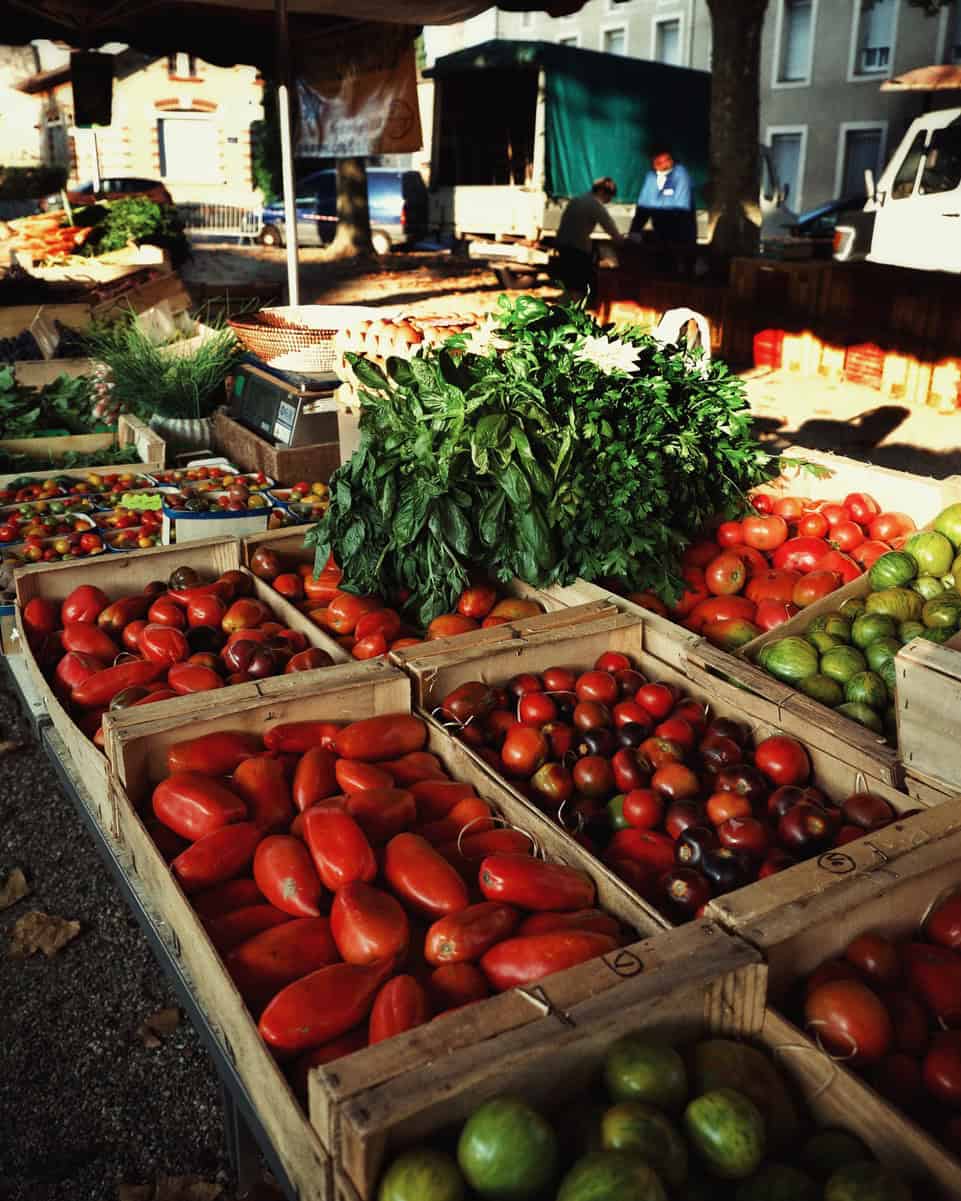
Photo Credit Kate Hill
A. Southwest France, and particularly the Lot-et-Garonne department where I live, is one of the most fertile and diverse agricultural departments in France. Everything grows here, from orchards of stone fruit, pears, apples, and kiwis to fields of seed crops and vegetables—tomatoes, cauliflowers, aubergines, peppers, lettuces, etc. It is the perfect place for a cook to live!
As you can imagine, our weekly farmers' markets are abundant, year-round, and very reasonable. I manage to grow all the herbs and greens I need in a raised bed potager next to the kitchen. But I am pretty haphazard about what I grow each year—sometimes hot peppers and tomatillos for the Mexican food I crave, and other years, lots of cornichons for canning.
Q. Is there anything about your kitchen that you would like to change or improve on?
Kitchen wooden stove and table. Photo credit Kate Hill
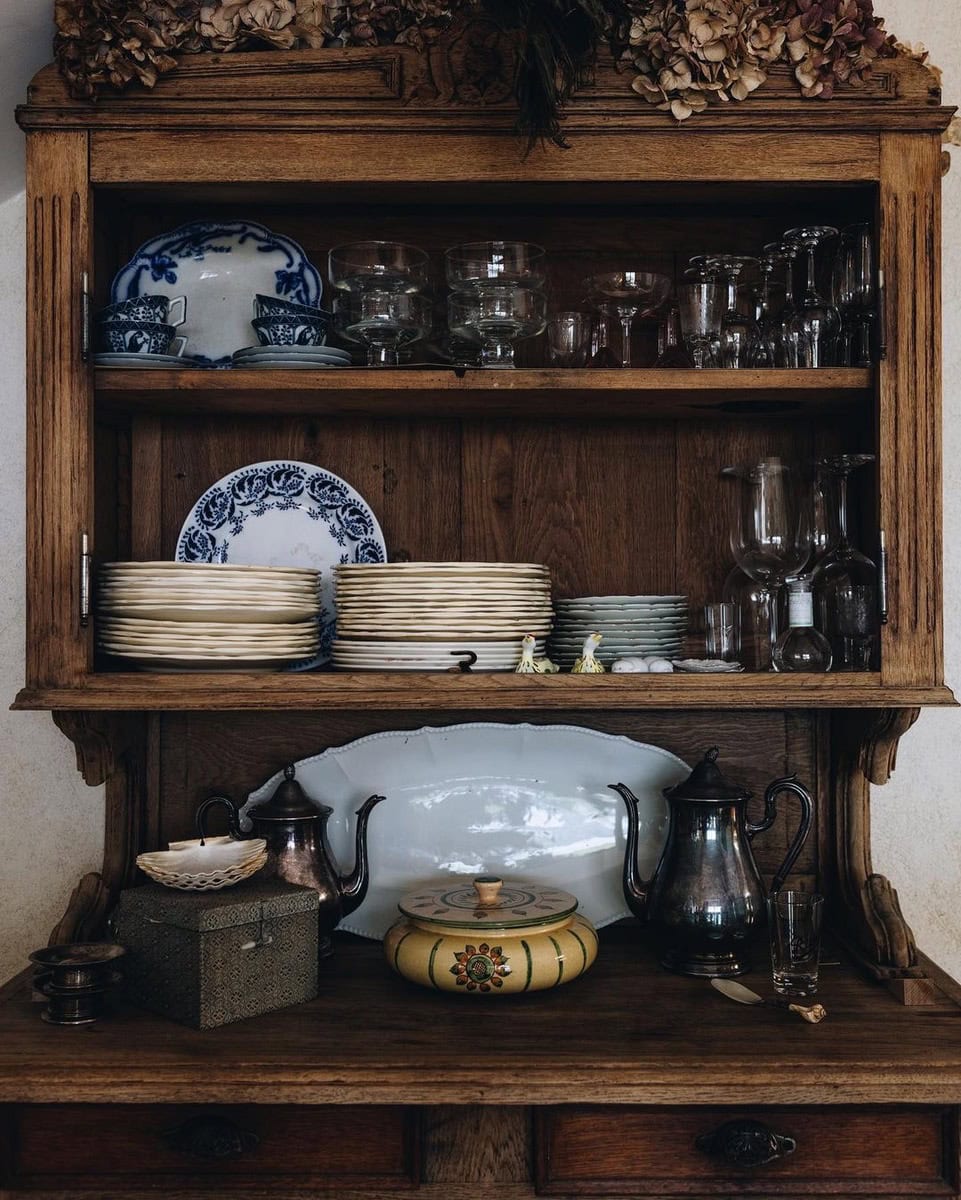
A. While we can always use more storage in a kitchen, however, I have a big pantry under one staircase that seems to be enough. I like having my tools on display and at hand so I can reach whatever I need from my workstation on the old boulangerie counter I rescued years ago. I love the small kitchen table that can seat six or squeeze eight near the wood stove, and we eat outside as much as we can throughout the summer. I like the cozy spaces of the old rooms.
Q. What tips can you give us that will help keep our kitchens neat and tidy and easy to manage.
A. I use the same tools over and over, so I would start by eliminating the things you really don’t use. I have too many knives, and it’s a project for this fall to cull them.
Q. How many cookbooks do you have and do you have any favourites? Have you written any cookbooks?
A. I keep my favorite cookbooks at hand, not all of them, but the ones I go to over and over for a reminder or inspiration. I might read a passage from Patience Grey’s Honey from a Weed, or Madeleine Kamman’s When French Women Cook. They are stored along the staircase between the railing bannisters with most of my favorite French and Gascon cookbooks. The rest are stored in my library and I must have over 300 books. Too many, just enough.
I have published and keep in print now on ebooks, 15 books, most are available on my website Relaisdecamont.com for purchase or for paying subscribers to my Substack The Camont Journals.
Q. Do you have a favourite recipe that you would like to share with us?
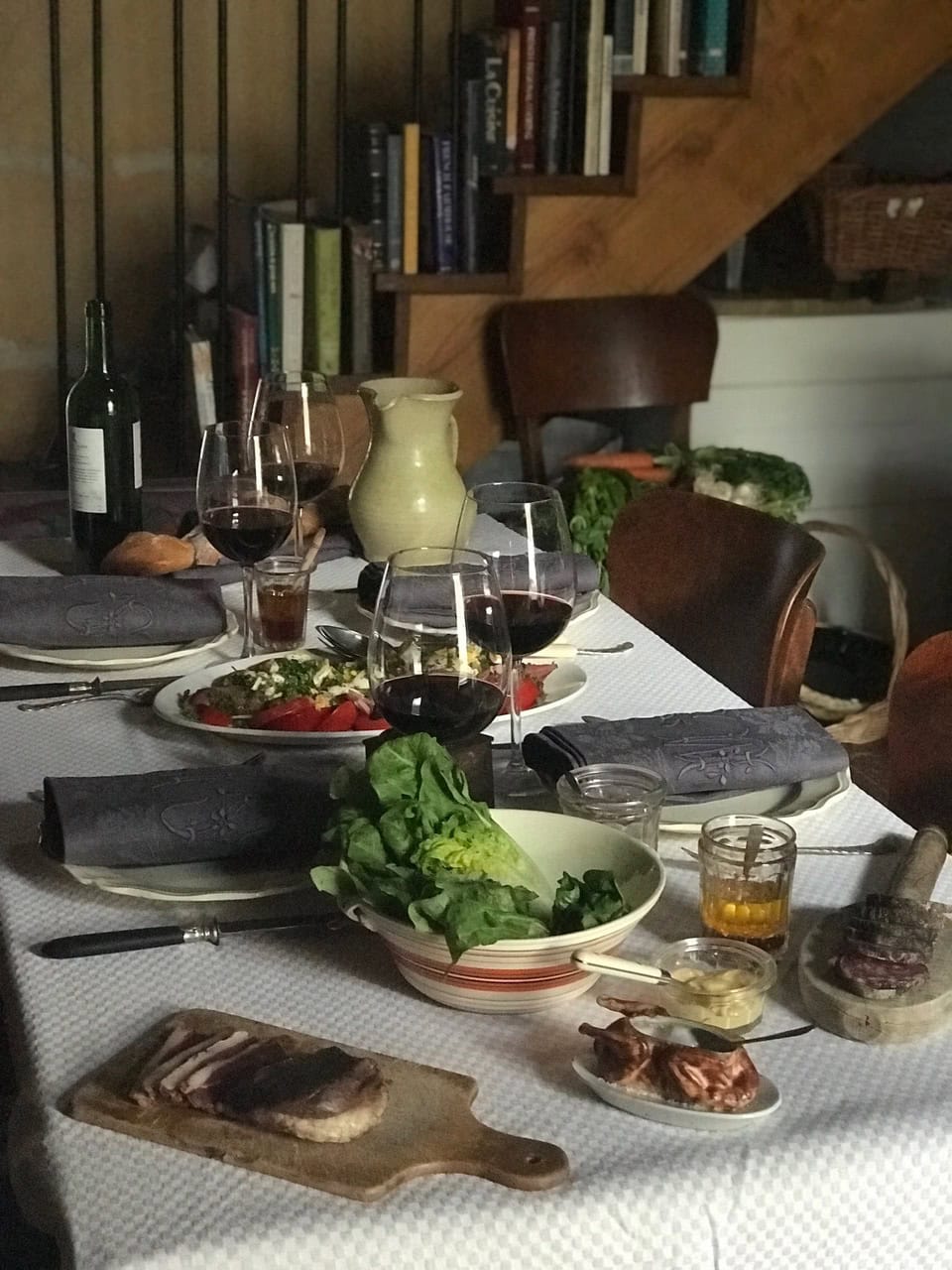
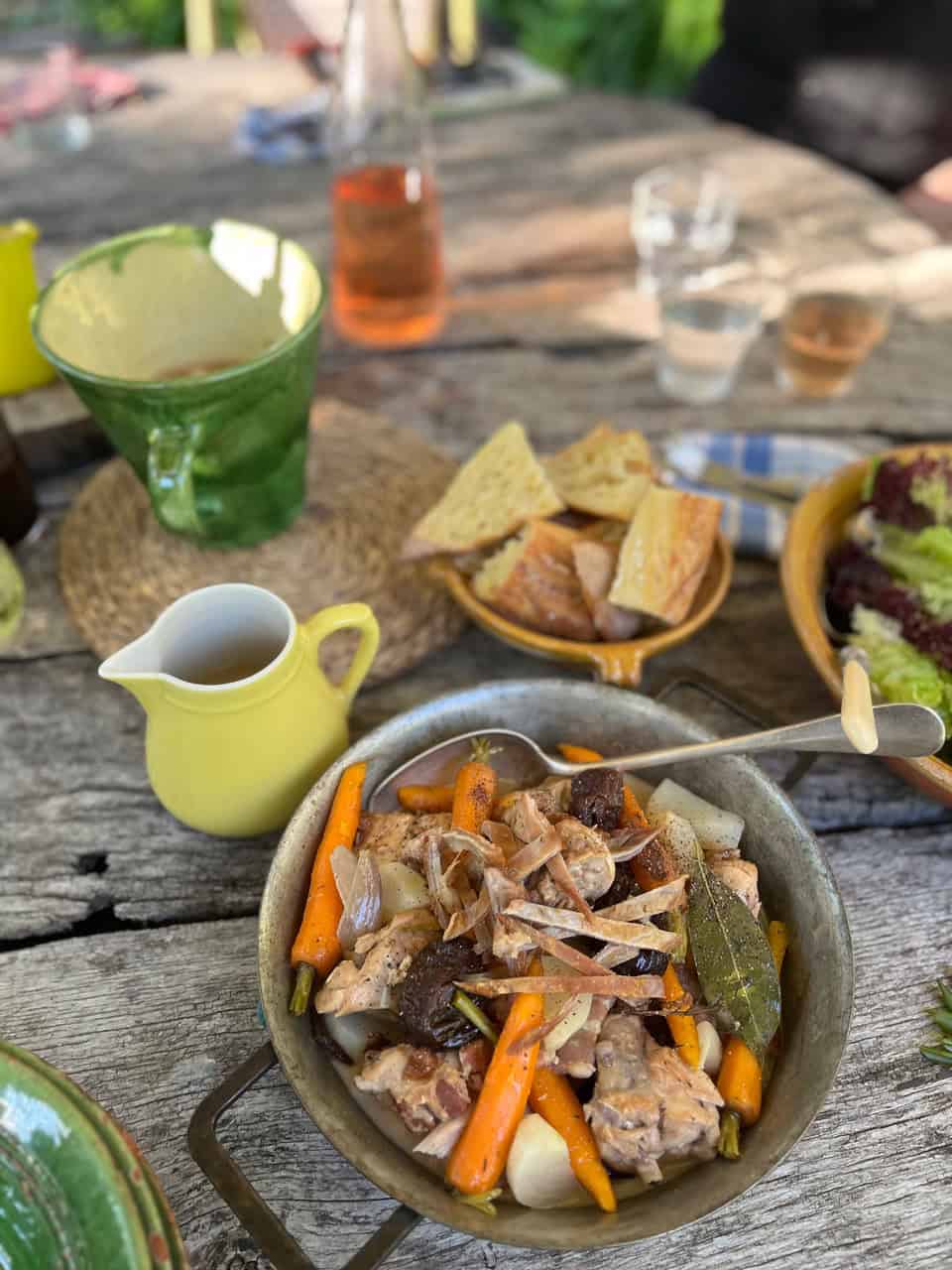
Lapin aux Pruneaux Image by Kate Hill
A. One of the first regional dishes I learned to cook was Lapin aux Preuneaux. I tell the story in Finding France and the recipe as well
Q. Have you had any kitchen disasters that you can share with us?
A. Of course, over the years, there have always been unforeseen excitement in an old French house: no electricity- we cook on the fire, burn the fig confiture- make smoky figgy bbq sauce. It’s more about how you recover that counts.
Thank you for sharing your kitchen with us, Kate. Visit and subscribe to Kate’s publication, The Camont Journals
Step into Other People's Bookshelves: Q&A with Julie McCoy, to discover some of her favourite books and the authors she would love to meet. Q - Hello Julie. Can you please tell us about yourself and your publication? Take a peek inside Julie's kitchen in this series, Other People's Kitchens. A - I have been writing short stories, plays, and essays for over 40 years. I have published two books, Get in the Car: A Food and Travel Memoir , as well as a collection of short stories, The Camp People . Both are available on Amazon. Currently, I write “ Something Tasty ” food-focused short stories on Substack. I’ve also finished a new novel, Randy & Rini , and am looking for a literary agent to run like hell with it to a publisher! Q - Please tell us about your bookshelves and cookbook collection, what they consist of, and how many do you have? A - I have about 50 cookbooks as well as food/gardening/wine-related books. I also have m...
Dive into Other People's Bookshelves, Q&A with Cheryl, Queen of Markets. and discover her favourite cook books old and new and the authors she has met and would love to meet. Q - Hello Cheryl. Can you please tell us about yourself and your substack publication? A - My substack is called Queen of Markets . I have a background of running farmers markets and a quirky interest in food history, food stories as well as food policy, sustainability and of course markets. Some of you may have read my recent piece, Never trust the Brownie Cookbook which was a joy to write for The Foodstack Library. Q - Please tell us about your bookshelves and cookbook collection, what does it consist of, and how many do you have? A - I’ve never counted my cookbooks; perhaps I should! They’re in two places. In my kitchen there’s a static and changing selection of books I turn to most often. They’re the books that have earned a lick on gold star whilst the ones in my library...
Q: Hello, Suzy. Can you briefly introduce yourself? A: My name is Suzy Valtsioti. I'm a writer, an artist and a foodie. I love to grow my own veggies and fruit. I write a substack publication called Sosanni Valtsioti in the Kitchen Q: How would you describe the layout of your kitchen, its history and how it was designed? A: This is a newly built house, so the kitchen is 2 years old! It is a long kitchen, it’s quite big and very simple. It has a farmhouse feel to it, and the windows look out onto the garden and the patio. It has 2 long counters and a kitchen table in the center. I have 2 armchairs near the patio balcony doors. I used to have them both facing outdoors - but I whimsically turned one around to face the kitchen - so I can keep an eye on everything and watch the TV from the armchair. I get a lot of reading done there! Q: How much role does your kitchen play in your family's life, entertaining, writing, and testing recipes for your newsletter? ...
Comments
Post a Comment