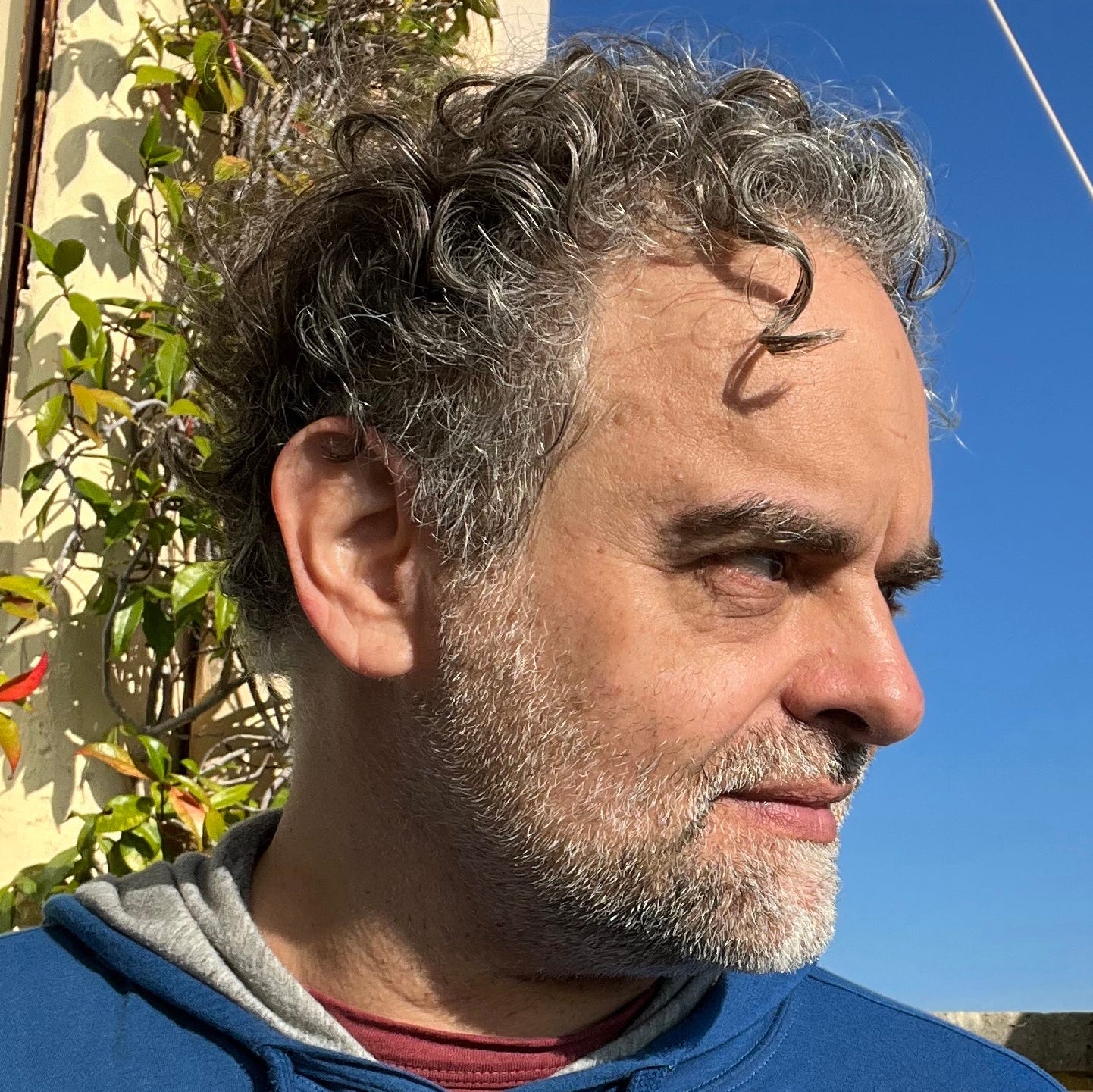
Q - Hello. Can you please tell us a little about yourself, where you live and your substack publication?
A. My name is Peter Barrett. I live a couple of hours north of New York City, in the Hudson Valley, where I grow, forage, ferment, preserve, and cook as much of my own food as possible—and where I’ve been teaching others to do the same for close to 20 years.
I recently developed and wrote the recipes for Dan Buettner’s Blue Zones Kitchen: One-Pot Meals, which is available for pre-order. I recently began working on a book with Dominique Crenn, one of the most influential chefs in the world and the first woman in America to win three Michelin Stars. She’s absolutely brilliant, and a powerhouse, and I’m thrilled to be collaborating with her.
I have two newsletters on this platform: Things on Bread and Flavor Freaks. Things on Bread focuses on teaching people how to cook without relying so heavily on recipes. I break down methods and techniques, helping people understand the role that each ingredient plays in a recipe so that they can make substitutions and begin to improvise based on what they might have on hand. Home cooks have some real advantages over professionals when it comes to experimenting and reusing leftovers in creative ways.
Flavor Freaks is dedicated to fermentation in all of its forms. It’s a collaboration with my friend Rich Shih, who co-wrote the definitive book Koji Alchemy and co-founded Kojicon, an online fermentation festival that recently wrapped its fifth annual occurrence. He’s a wizard, and a wonderful human being. We’re building a community of fermentation enthusiasts—of all skill levels—and a resource for information and inspiration. Fermentation is ancient, but it’s also the future of food in many ways since it boosts flavor and nutrition while also preserving food for long periods. It also allows us to dramatically reduce or eliminate food waste, which is vitally important. Modern society wastes far too much food.
Q - Can you please describe the layout of your kitchen, how much of a role does it play with your family, and when writing for your publications?
A. I renovated my kitchen last summer, about a year after moving into this house. The previous kitchen looked like a Home Depot threw it up in 1989. Everything was ugly and/or broken, and I was thrilled to get rid of it—though I did develop and test 110 recipes for the Blue Zones book in that kitchen, so if yours isn’t to your liking, don’t blame your tools! A good cook can make almost anything work.
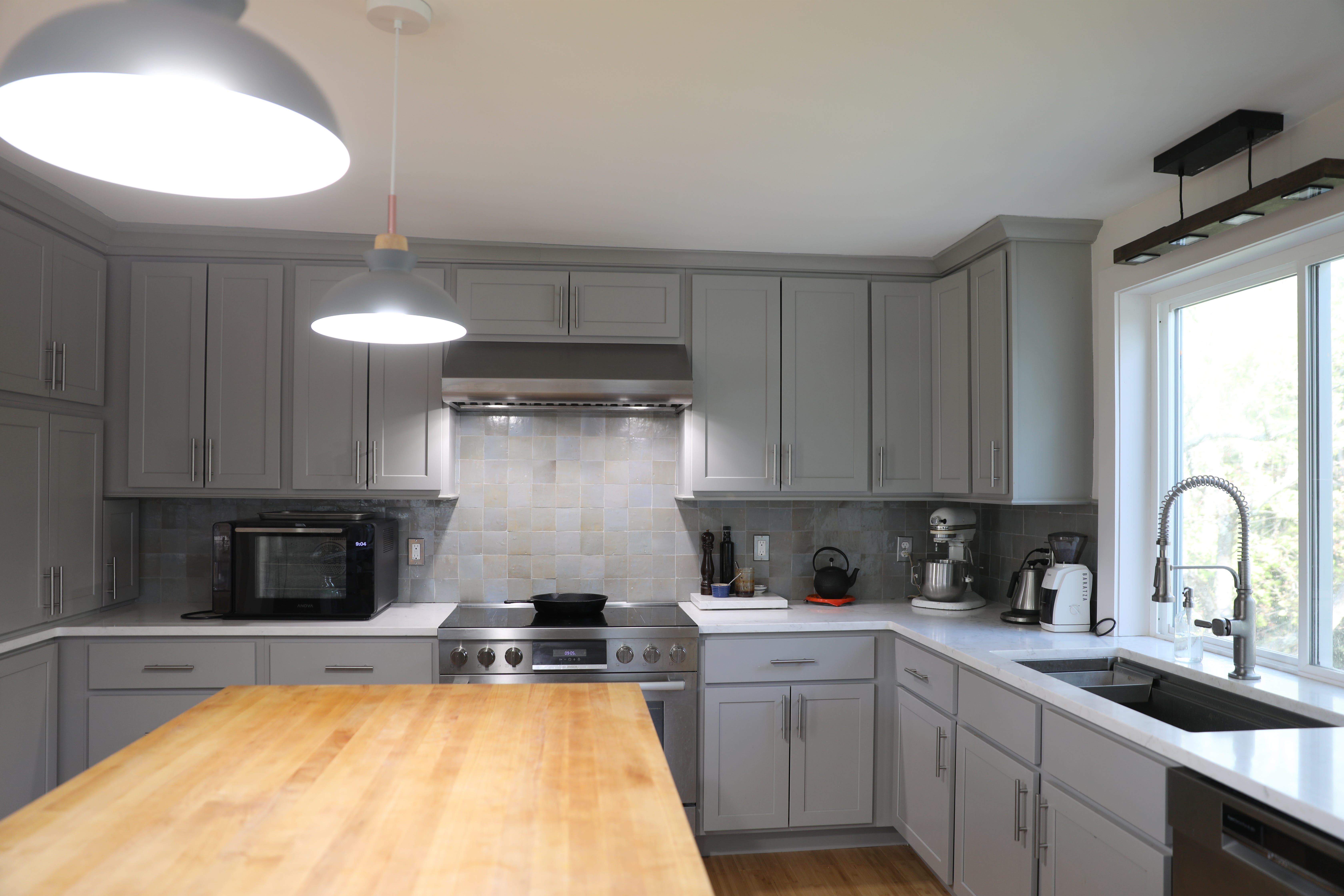
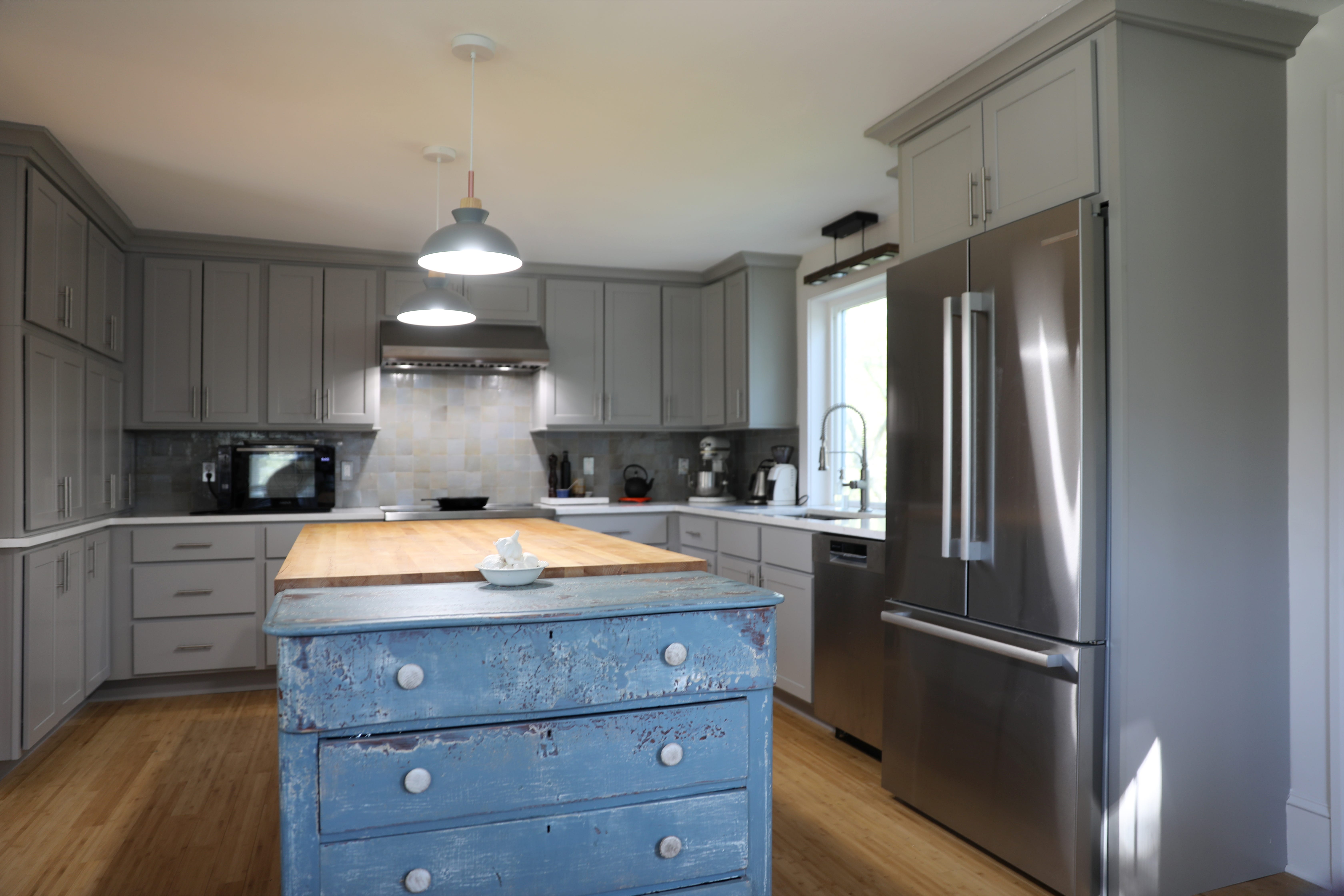
The island is 3 x 6 feet, with a butcher block top, which for me is absolutely essential. I need a big work surface and I hate dealing with small cutting boards unless I’m working with animal proteins or something very messy. The window over the sink looks out at the stream behind my house, and I have a bird feeder out there, and it’s a lovely view that makes washing dishes a lot more pleasant.
Q - What are your most used kitchen gadgets that you cannot live without?
A. I treasure my mom’s old KA stand mixer, which is nearly as old as I am. She used to make bread regularly when I was young (and had a big garden), so I love being able to make bread using the same machine. I also have her food processor, which sees regular use as well. Good knives are important, but far more important is keeping whatever knives you have as sharp as you can. Learn to sharpen your knives! And do it regularly.
Q - Can you please tell us about the fermenting and preserving that you do in your kitchen? Is this something anyone can do?
A. I ferment everything. It’s a particular passion of mine, and I’ve spent almost 20 years investigating traditions and techniques from around the world. I make by-the-book ferments like sauerkraut and gochujang, but I also experiment a lot with unusual combinations based on what my garden produces, or ideas that inspire me.
Besides all manner of pickled vegetables, I make a lot of vinegar and drinks like tepache, a favorite that I try to never be without. I really like making miso-type umami pastes, as well as liquids like garum and shoyu that I use in place of store-bought soy or fish sauces. For these koji ferments I like to grow my own koji (a mold called aspergillus oryzae that’s used to make miso, sake, and soy sauce), which is geeky but the resulting flavors are much better than with store-bought versions. I used to make a lot of yogurt and some very good camembert and other cheeses, but don’t do as much with dairy as I used to. I also make mead and some other alcoholic ferments, but I haven’t ever distilled alcohol.
All of these various ferments play a big role in my cooking. I feel strongly that home cooks should also learn to ferment, and that there should be no barrier between cooking and fermenting since the two processes overlap and inform each other so much. That’s why Rich & I created Flavor Freaks.
Q - How would you describe the regional cuisine where you live? Are there fresh food markets, or farmer’ markets available?
A. There are lots of good farmers’ markets in my region, since it’s agriculturally very productive and close to New York City, which is a voracious market for high-quality produce and products. There’s not much of what I’d call a regional cuisine, but there are plenty of options for varied eating given the diversity of the population. I will say that while now there are some excellent restaurants run by gifted chefs, when I first moved up here there wasn’t much to choose from in terms of high-quality dining. That absolutely contributed to my development as a home cook.
Q Is there anything about your kitchen that you would like to change or improve on?
A. I could use a pantry for sure, but I’m lucky to have a basement where I built some shelves so I do have extra space for storing all the jars of pickles, salsas, tomatoes, and other products that I make. I would like to get a moro at some point—it’s a specialized wooden cabinet for growing koji in.
Q - What tips can you give us that will help keep our kitchens neat and tidy and easy to manage?
A. Clean as you go! And focus on using fewer tools. The more appliances you involve, the more cleaning you’ll have to do and the less fun you’ll have. Also, if you ferment, get in the habit of processing your byproducts (fruit & vegetable peels and scraps, for example) as part of your cooking flow. That way you’re making dinner and a jar of pickles (or miso, or vinegar, or something else) at the same time.
Q - Do you have a favourite recipe that you would like to share with us?

A. This recent cornbread recipe is delicious, but it also shows my approach to cooking: learn what’s happening in a given recipe so you can improvise or make substitutions without diminishing the result.
Q - Have you had any kitchen disasters that you can share with us?
A. A couple of years ago, the day before I hosted a big dinner party for some seriously famous A-list talent (a couple of top chefs, a renowned dancer/actor, a legendary food writer), my oven died. So I had to bake all the bread and make the dessert (a couple of apple tarts) in the toaster oven. It did work, so disaster was averted, but the last-minute scrambling was not relaxing at all.
And I’ve burned or ruined tons of things. It happens, especially if you’re trying new dishes or techniques. My grandfather used to say “If you’re not falling, you’re not skiing.” I think that’s definitely true for cooking. Each failure teaches us something and makes us better cooks if we pay attention. The most important thing is to relax, and enjoy the process. It’s just dinner!
Thank you so much, for inviting us into your kitchen, Peter. All images are credited to Peter Barrett.
Visit and subscribe to Things on Bread and Flavor Freaks.
Read more from the series:
Comments
Post a Comment