Q: Hello Devan. Can you please tell us a little about yourself, where you live and your Substack publication?

Image by Luke Johnson
A: Hi there! Yeah, my name is Devan Grimsrud. I was born and raised in the suburbs of Minneapolis, Minnesota and now live in Berlin, Germany, in a little neighborhood in the northwest of the city called Wedding.
I’ve been publishing my weekly Substack newsletter since January 2023. It’s called darn good as an homage to my Midwestern upbringing and, coincidentally, my initials. It’s a newsletter for people who love to eat and can't wait to cook. I would describe the recipes as playful and fun, with a focus on being “highly cookable” (a favorite tagline of mine from Alison Roman’s debut cookbook, Dining In) and delicious, of course.
Q: Can you please describe the layout of your kitchen? How much of a role does it play with your family and when writing for ‘darn good’?
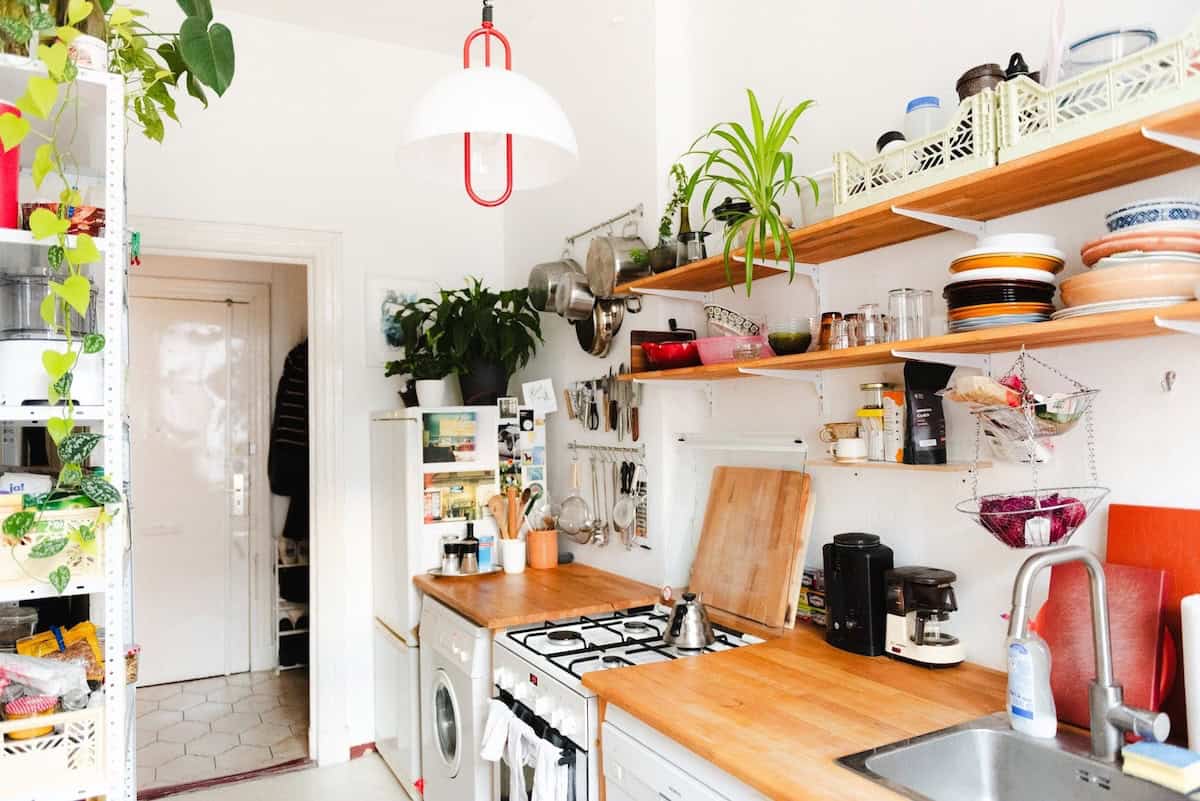
Image by Luke Johnson
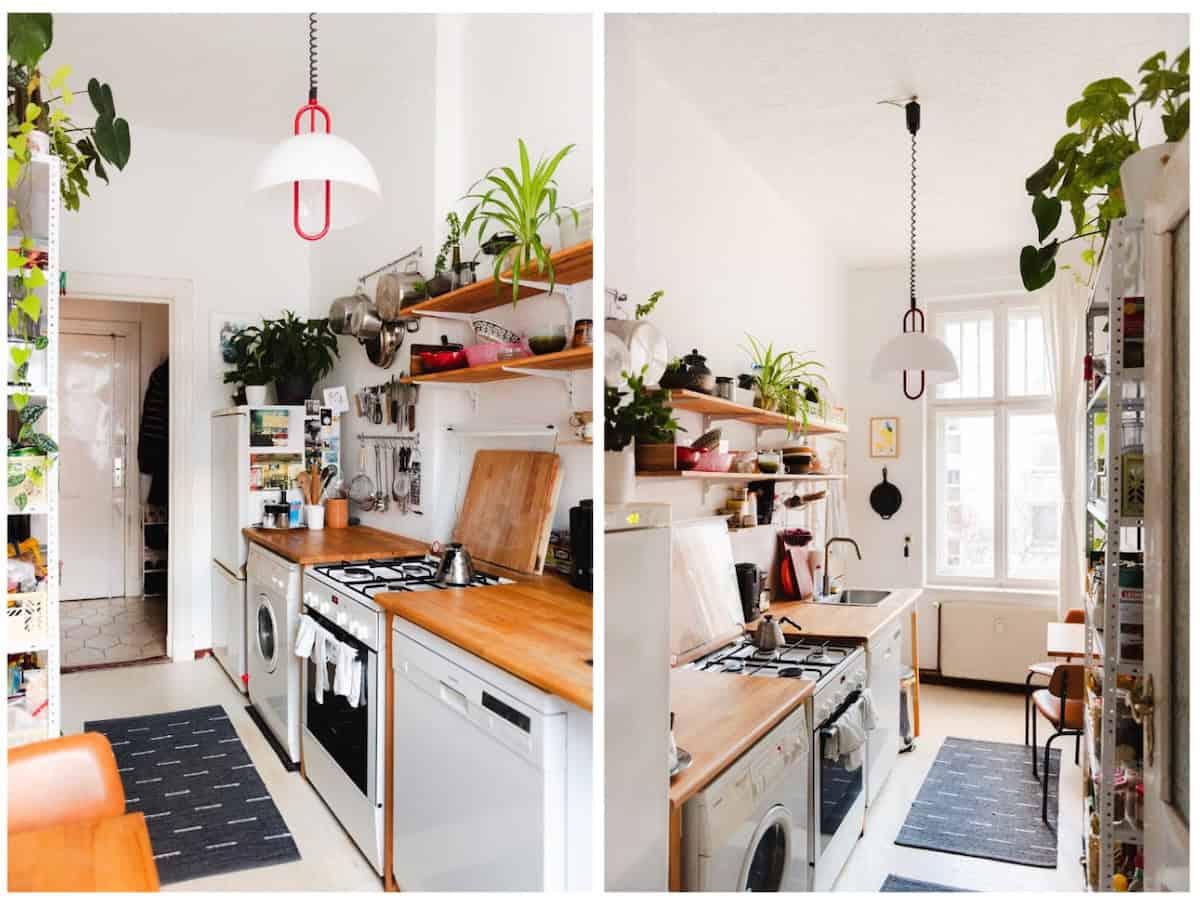
A: I have a small galley kitchen that has all the appliances and working counter space running down the right side with a shelving-unit-slash-pantry and a breakfast table for two on the left side. There are also two long open shelves above the counter for dishes and both hanging and magnetic racks for utensils, knives, pots and pans.
Images by Luke Johnson
When I moved into this apartment with my partner in 2018, we had to put in our own kitchen and decided to do it ourselves (aka not with Ikea). We took measurements, planned everything out, bought slabs of wood from the hardware store, sourced used appliances from eBay Kleinanzeigen (Germany’s Craigslist equivalent where my partner somehow managed to cobble together a matching set of white Siemens appliances from the 90s and 00s) and hired a handyman to help us install everything.
So far, the kitchen counters and appliances have kept up with our lives really well with minimal upkeep and the layout still works for us. We have enough counter space for multiple people to cook together and thanks to a set of large south facing windows and a door, we don’t have an issue with ventilation, even when things get smoky.
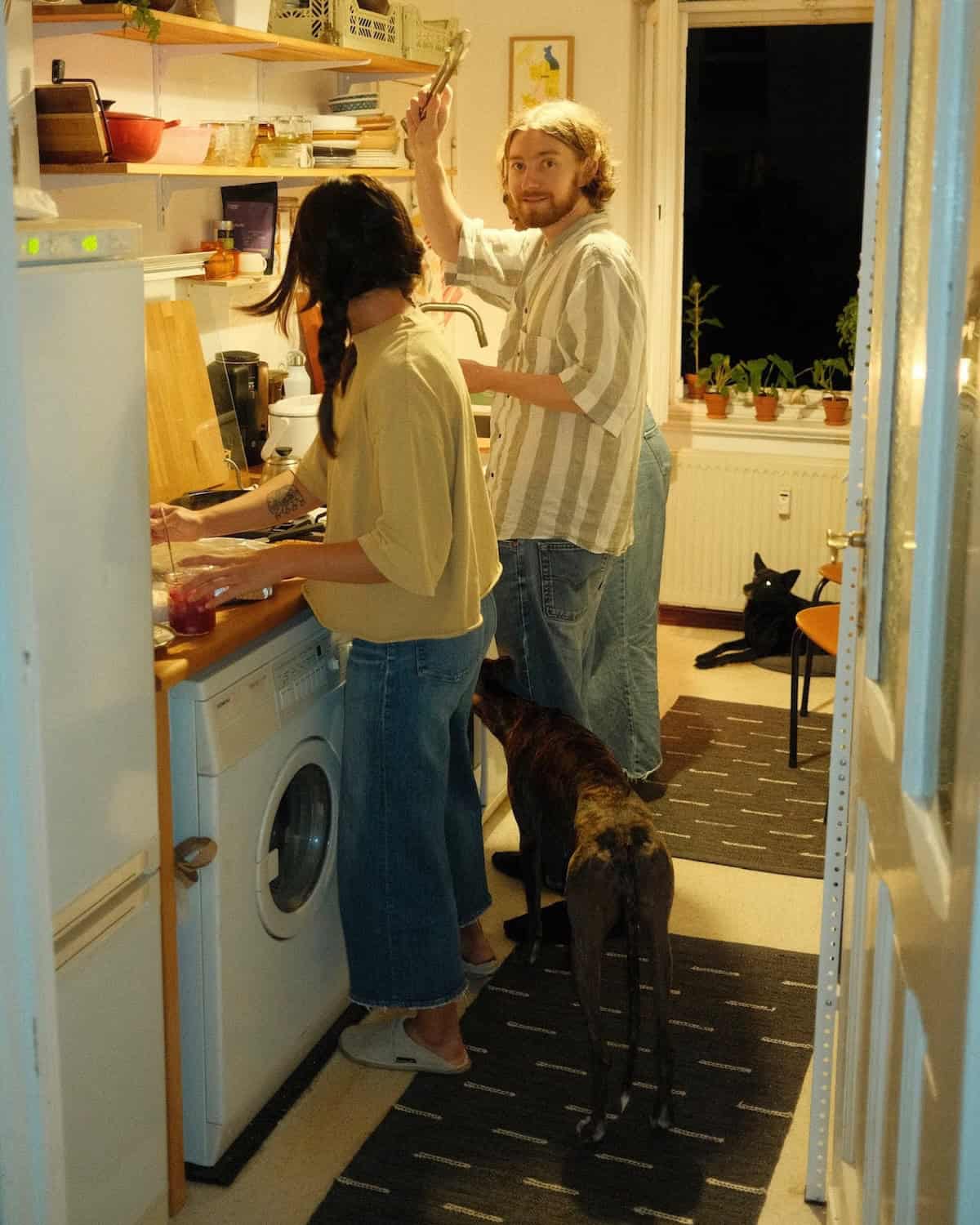
My partner Luke waving to the camera as we cook dinner with our friends, Prerana (unfortunately you can't see her behind him!) and Nishant (behind the camera), and our two dogs, Rocket and Pia.
When it comes to developing recipes for darn good, my kitchen and the appliances in it are obviously integral. We opted for a “full size” fridge (it’s still slightly smaller than the average refrigerators in the US at just 22 inches wide and 60 inches tall) as opposed to the classic mini fridges found in many Berlin apartments, and I’m so glad we did because I really need the space when developing recipes to keep loads of ingredients, leftovers so nothing goes to waste, and to freeze things, et cetera. We also decided to get a gas stove which I absolutely love and never want to part with.
One of the hardest parts about shooting my recipes and videos for the newsletter in this kitchen is that the best natural light is right up next to the window, so I often perch a slab of leftover wood from our kitchen shelves on the window ledge and shoot my photos and videos there.
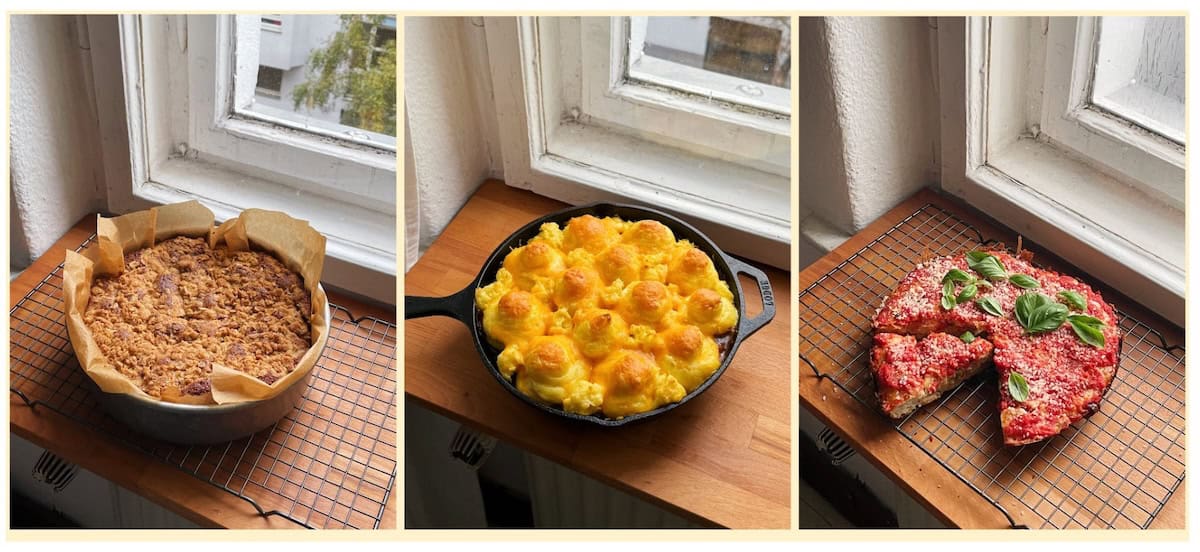
L-R. Brown Butter Apple Cake. Mushroom Sheppie. Hidden Pizza. As you can see by these three examples, the windowsill is a mainstay when I'm creating and shooting my recipes
Q: What are your most used kitchen gadgets that you cannot live without?
A: I would not want to live without my Lodge cast iron skillet. It’s one of my favorite pans and I use it for so many things from deep dish skillet pizzas to scrambled and fried eggs, pancakes to the best grilled cheese sandwiches, stovetop to oven braises or roasts—I could go on. I find a lot of people are intimidated by using cast iron, but it’s not hard to treat it right and season it properly. Once you learn how to do it, you’ll never, ever need or want to buy a nonstick skillet again.
And a few special mentions: stainless steel tongs, bench scraper, microplane.
Q: You have been a professional writer and recipe developer for a number of years. What were the influences behind this career?
A: I love this question! When I think back on it, I’m not sure where or what exactly started me down this path, but I do know that I watched a lot of Food Network as a kid. I loved Rachel Ray, Giada De Laurentiis, and Ina Garten, was fascinated by Alton Brown, entertained by Emeril Lagasse, and lived for the cutthroat competition of Iron Chef (both the original and Iron Chef America). I remember occasions when I would be making a snack after school—something simple like a quesadilla or Kraft mac and cheese or a packaged ramen or something like that—and I would silently mouth the instructions to the wall, gesturing over the stove as if I was talking to my imaginary television show audience, lol!
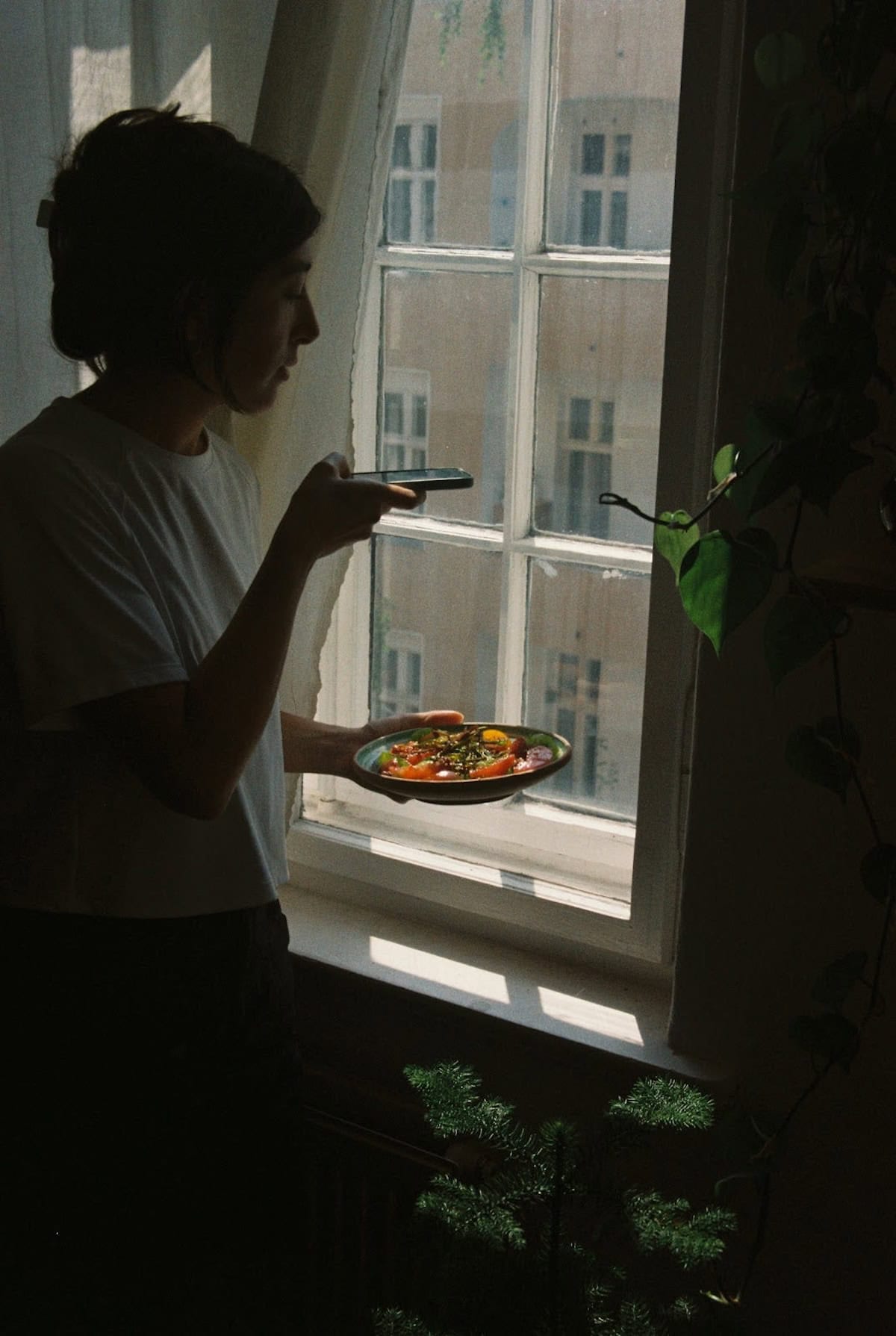
Image by Luke Johnson
My family definitely also played a part. My mom was a single mom for many of my formative years and we lived with my grandparents. I remember that we would make and eat dinner together nearly every night of the week. My mom always made the salad in a big wooden bowl (which I rarely ever ate because I was so picky; I missed so many delicious greens, of that I’m now certain) and my nana would prepare the main, unless my papa was grilling (which he did often, even in the middle of a snowy Minnesota winter). So I was definitely surrounded by people who showed me and helped me understand the significance of cooking and eating together.
Q: You live in Berlin, Germany having moved from Minneapolis. How did this come about and how did you adapt to moving to another country?
A: After university, I was lucky enough to find a job working for chef and television personality Andrew Zimmern. I started out as a summer intern and worked my way up to an associate producer at his then newly-founded production company, Intuitive Content. At the time I was also writing on the side, doing interviews and listicles for Eater Twin Cities and getting to know the faces and places in the local restaurant scene.
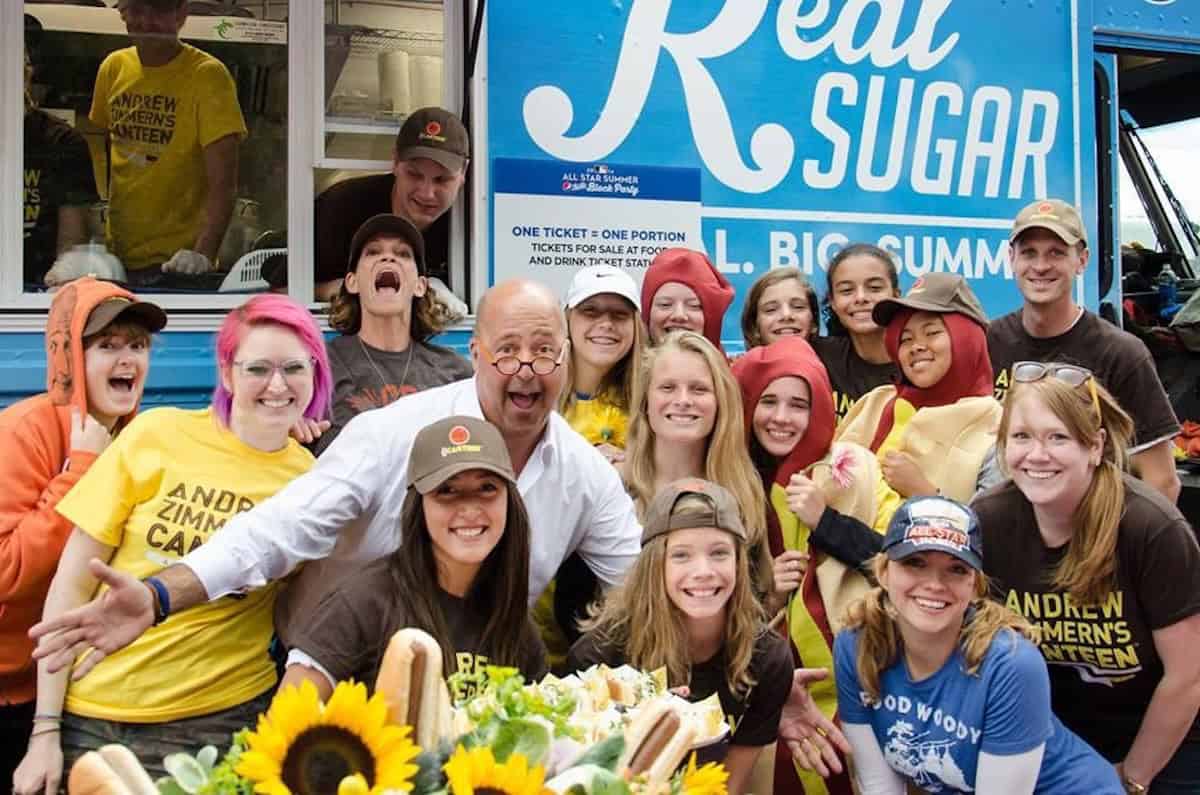
A photo of the team working a summer event in 2014.
A few years went by and my partner Luke and I decided we wanted to move, to work and live abroad and get new experiences in another country and city. We settled on Berlin because Luke had studied abroad there as a student, the city is known for its international creative scene, and Germany had an easy option for us to obtain a visa to find work—three things we didn’t see in any other European country/city at the time.
Adapting to living in Germany wasn’t easy. After the initial honeymoon phase of arriving at the cusp of a beautiful Berlin summer in March 2017, the extremely dark, very gray winter (Minnesota’s winters may be long and cold, but they’re also sunny!), along with general cultural shock, hit me pretty hard. Luke had studied German in high school and minored in the language in college, so he was able to communicate better and was more familiar with some of the cultural aspects that I struggled with. After living here for nearly 8 years now, I’m more or less used to what got on my nerves before, but it definitely took time.
Q: How would you describe the regional cuisine where you live in Berlin? Are there fresh food markets, or farmers markets available?
Wedding is one of the most diverse neighborhoods in Berlin, which means that there’s a lot of great food. Some of my favorite restaurants within walking distance from my apartment are Jordanian, Turkish, Bosnian, Syrian and Lebanese, plus an Albanian bakery, a Neapolitan pizza place and a tiny Thai restaurant. It’s safe to say I’m pretty spoiled.
There are plenty of different kinds of supermarkets, butcher shops and small farmers markets in Wedding, but not so many with organic produce. I often have to split up my daily or weekly shop between different stores or markets depending on what I need, which can be a pain, but I’ve gotten both used to it and pretty good at planning ahead.
I like to cook with Chinese and Korean ingredients quite often, which I can only pick up at an Asian supermarket. I get large bunches of fresh herbs specifically at a Turkish or Arab grocery store, plus things that I can’t really get at the average grocery store chain, like really nice dates, wild cucumber pickles, and different varieties of bulgur, cheeses and olives. There are also a handful of African and Indian grocers, so if I need specific spices, snacks or specialty produce like plantains or green chilis, I’ve got options.
Q: Is there anything about your kitchen that you would like to change or improve on?
A: Yes, I would definitely rethink the idea of open shelving in the kitchen. I like the look and the convenience, but when the shelves are directly over the stove, they get dirty quickly and are annoying to clean.
I also admittedly have a problem with the pantry, which I would describe as four shelves of organized chaos. It’s my own doing, as I like to have a lot of different spices, grains, pasta, beans, flour, sugars, canned goods, et cetera on hand at any given time. I could say the solution is just adding more pantry space, but I think I would fill out those shelves in no time, too.
Q: What tips can you give us that will help keep our kitchens neat and tidy and easy to manage?
A: Ooh, haha, as you just heard, I’m not the best when it comes to organization in the pantry, but one thing I always try to do, especially with fresh food, is FIFO or First In, First Out.
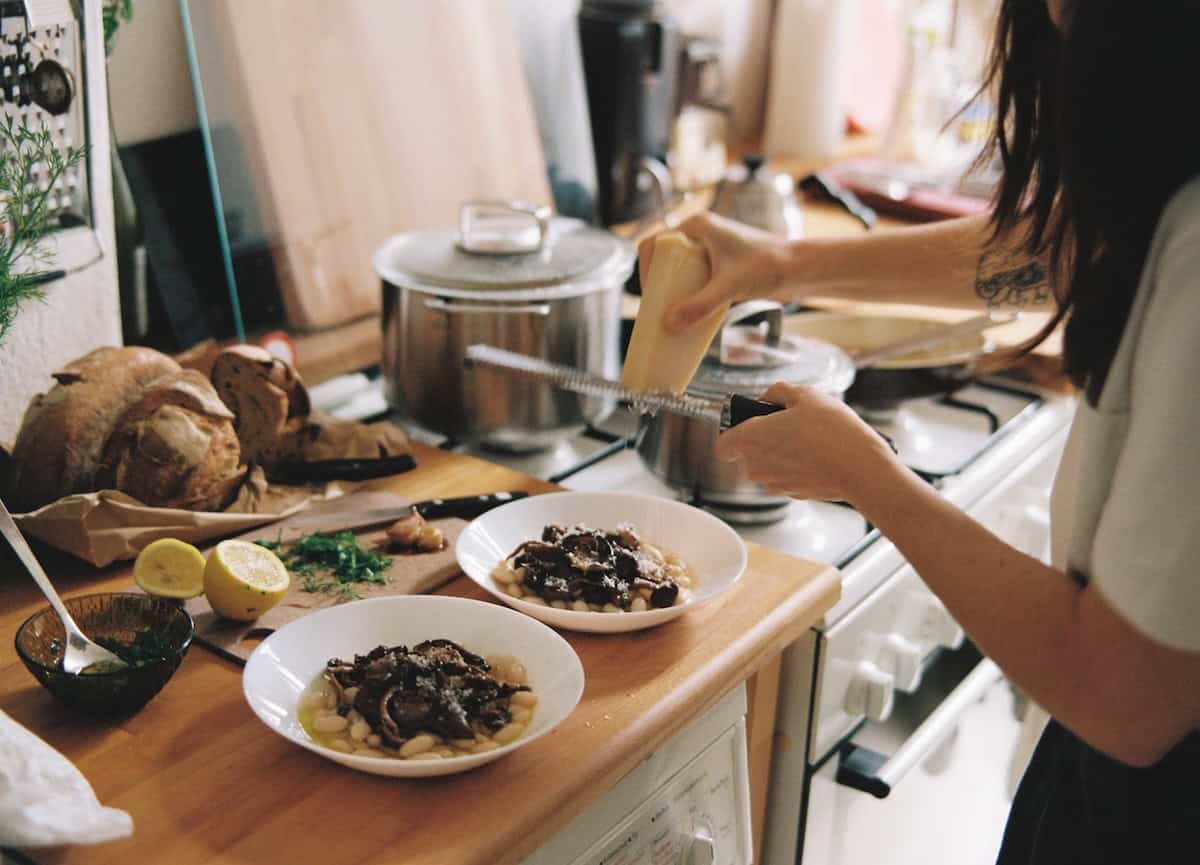
Image by Luke Johnson
It’s an easy, clear way to prioritize the cooking and using of food that’s been in the fridge or pantry longer; what went in first, should also be used first. It’s really helpful to cut down on food waste, and while I’m personally not really able to organize my pantry this way, I’m pretty strict about this when it comes to the fridge and freezer. I think it’s a great method that more people should know.
Q: How many cookbooks do you have and do you have any favourites? Have you written any cookbooks?
A: I have maybe 30 cookbooks in my apartment currently. My favorite at the moment is More Than Cake by Natasha Pickowicz. I find her flavor combinations and techniques inspiring and the recipes are fun to make. I was also recently gifted Start Here by Sohla El-Waylly and am slowly working my way through and loving it. Even for an experienced cook, it has a lot to offer.
I haven’t written my own cookbook, but I’ve worked on two: I was a writer and editor on a self published cookbook for a Berlin-based restaurant, House of Small Wonder, and I was the lead editor on Kitchen Stories’ first cookbook, Anyone Can Cook, published in the German language by Penguin and in English by Prestel.
Q: Do you have a favourite recipe that you would like to share with us?
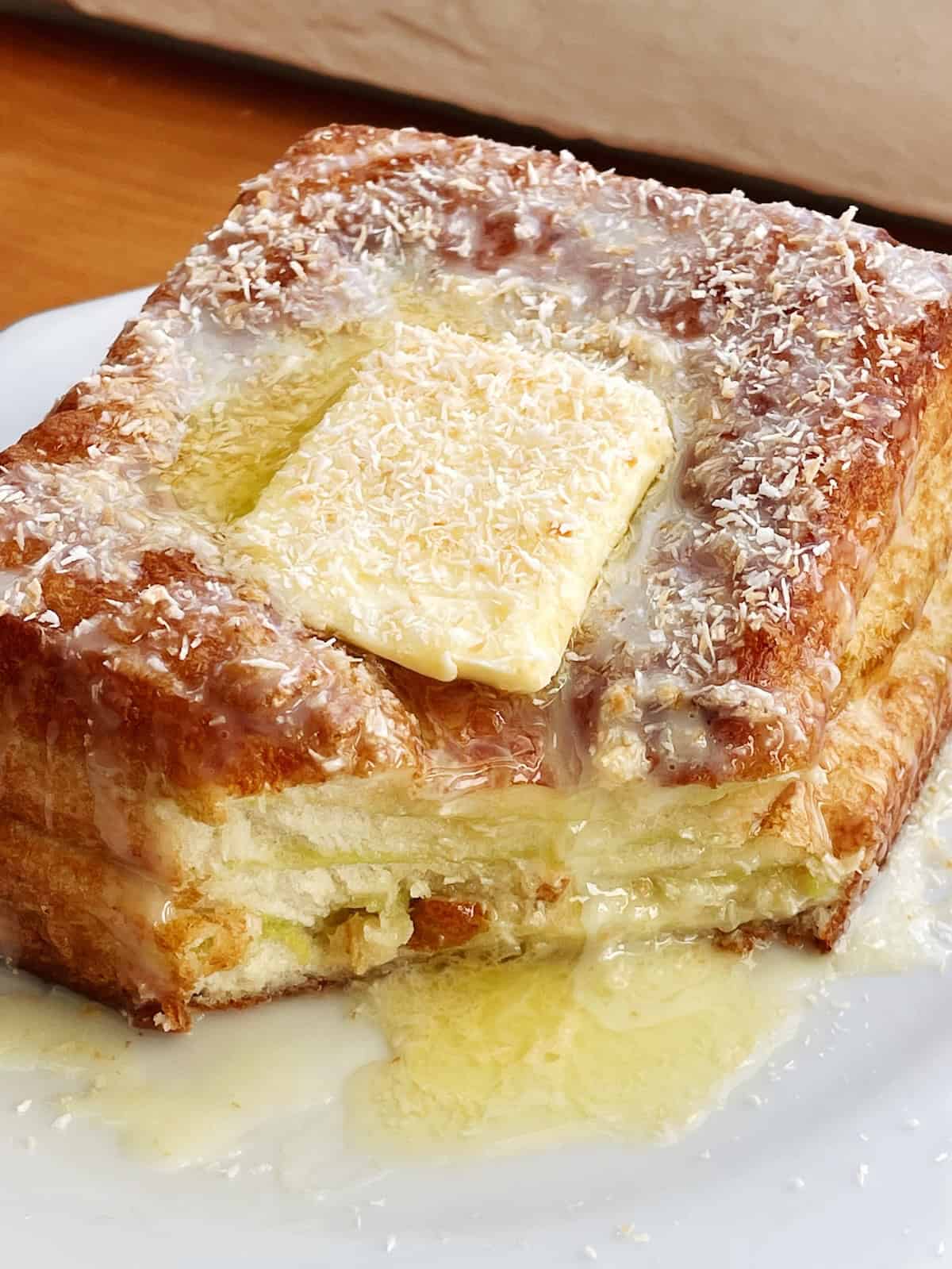
A: I think one of my favorite recipes I published on darn good is for this Hong Kong-style French toast with kaya. It’s a special recipe that certainly isn’t for everyday, but I find it so joyful and tasty. If you’re in Berlin, Kreuzberg’s beloved kopitiam, Ma-Makan (whose homemade kaya I used in my recipe) sometimes serves it as a brunch special on the weekends, which I also think is really cool.
A few other favorites: spicy spaghetti and tender meatballs and fennel sugar cookies with dark chocolate.
Q: Have you had any kitchen disasters that you can share with us?
Ooh, this is a tough one. Of course I’ve made my fair share of mistakes in the kitchen, but I’ve learned to see them more as an annoying roadblock that ultimately improves my cooking than a completely unfixable disaster. My most recent little disaster involves my brown butter apple crumb cake.
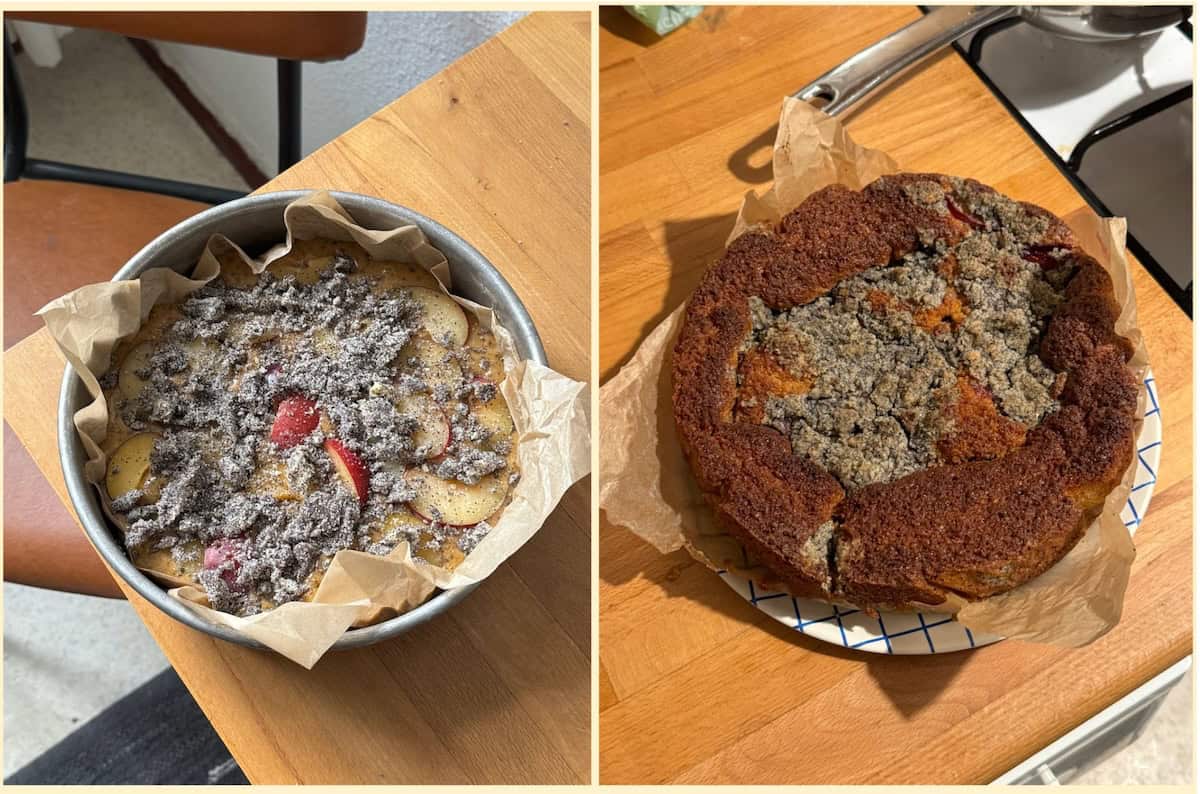
My failed brown butter plum cake before and after baking.
I wanted to adapt the recipe with just a few tweaks—namely swapping the apples for plums and switching up the crumb topping a bit. Easy right? Well, everything was completely fine until I went to pull the cake out of the oven and saw a relatively wet, buttery mess. So I let it bake longer to set up. In the end it was still tasty and completely edible, but it was definitely over-baked and the crumb topping had all but sunk into the center of the cake. I tried again a few days later, using fewer plums and less crumble topping, but the same thing happened. I’ve let the recipe cool a bit on the back burner and am still planning to revisit it, but the frustration is real with this one!
Thank you for sharing your kitchen with us, Devan. Visit and subscribe to 'darn good'.
Comments
Post a Comment