Q: Hello, Emma. Can you please tell us a little about yourself and your Substack publication?
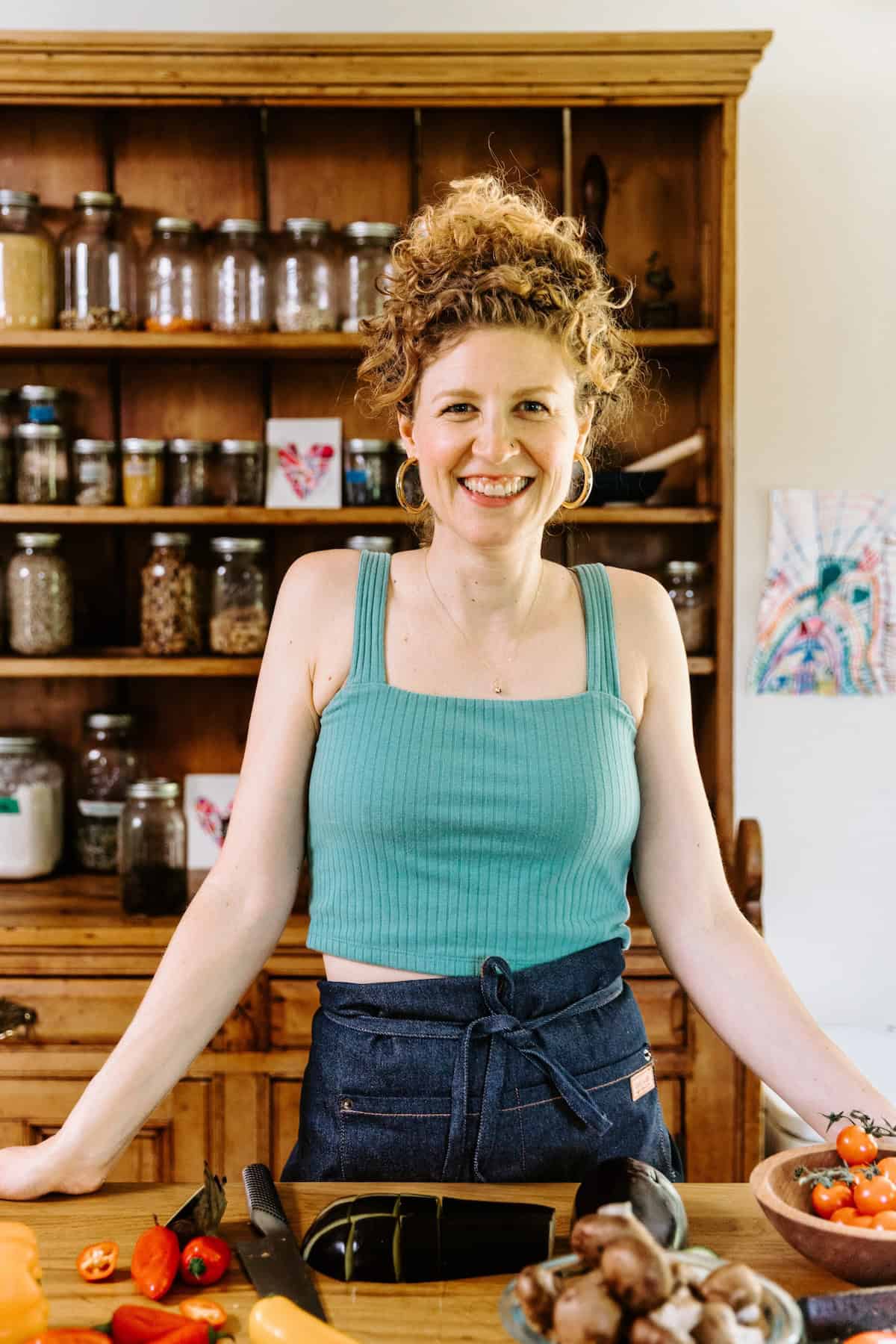
A: I’m honored to be here! I’m a mother, cookbook author, and culinary teacher empowering home cooks to make simple, delicious, seasonal meals that they can be proud of.
As a first-generation American, raised by an Italian mother in a multicultural family, food was woven into the fabric of my upbringing. From an early age, I shadowed my mother in the garden and the kitchen.
Despite a long career in food, as an exhausted and overwhelmed mother of two, I was not prepared for the daily struggle of feeding my family. Eventually, I developed techniques and tools for nourishing my family - and myself - while emphasizing joy, connection, and healthy relationships around food.
My experience overcoming this challenge is what sparked Time For Dins.
Caregivers are faced with enormous pressure to nourish their families while having limited time, inspiration, and resources. Through Time For Dins, I offer easy recipes, seasonal meal plans, and proven tips to help make dinner time less stressful and more joyful for other caregivers and their families.
Q: Can you please describe the layout of your kitchen, how much of a role does it play with your family, when writing Meal Plans and testing recipes for your ‘Time For Dins’ newsletter?
A: I have an old farmhouse-style kitchen, with a gorgeous sink that always catches people’s eyes (and allows for plenty of stacked, dirty dishes).
It’s large enough for an island where my daughters can sit to eat or do their homework while I cook. It’s also a central space for us to cook together. There is plenty of counter space along one side of the kitchen, as well as a built-in bookshelf for cookbooks.
As a mother, it’s important to me that several elements of my kitchen are accessible for the kids. The plates and glasses live on shelves on the island, so they can easily get their own dishware and also help with emptying the dishwasher (which right now, is seldom!). The same goes for snacks.
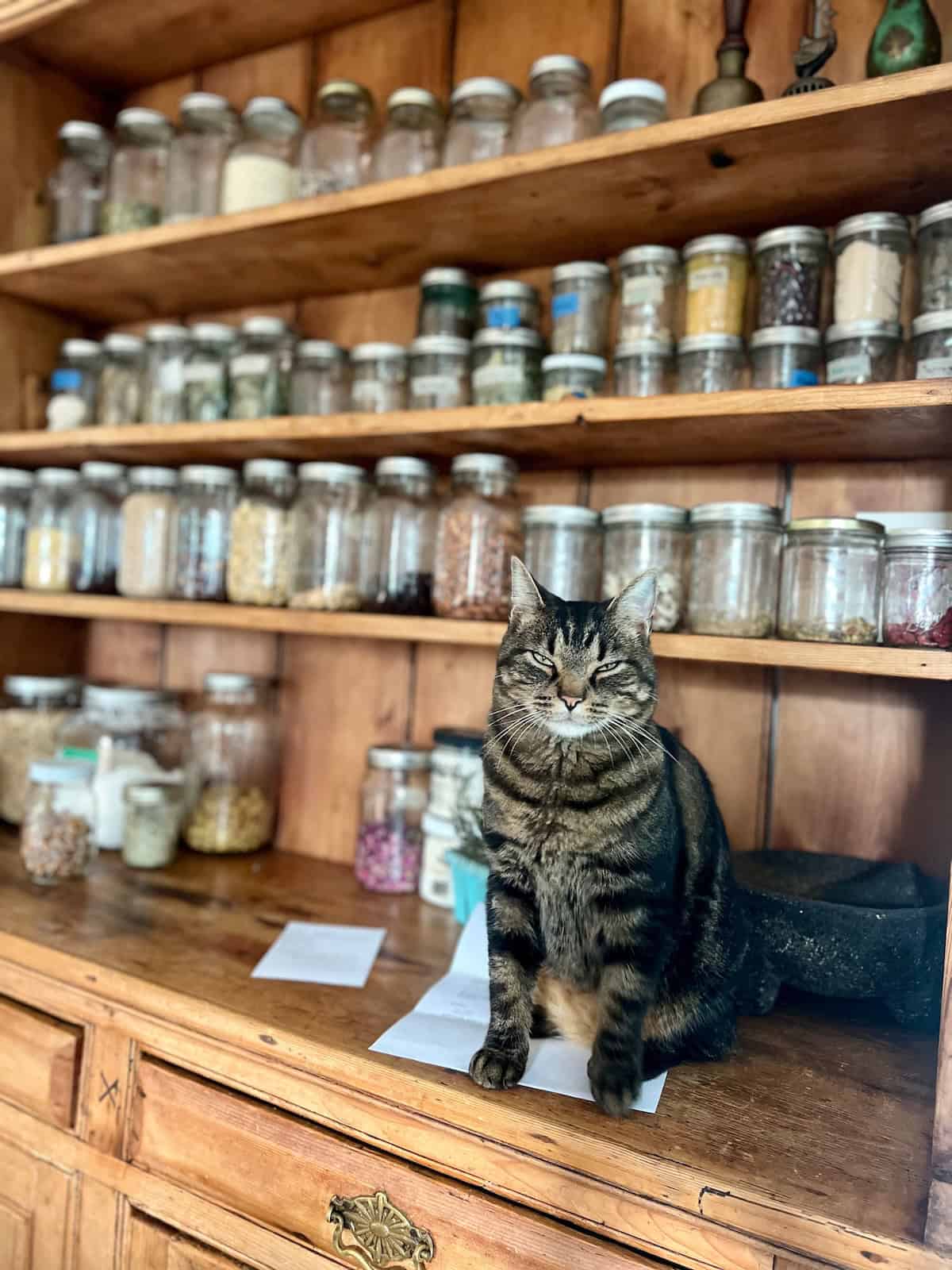
But perhaps best of all is the antique hutch I inherited from my Italian grandmother, lined with jars of herbs, nuts and seeds, dried fruit, and grains. I call it my “witches pantry.”
Q: What are your most used kitchen gadgets that you cannot do without?
- My cast iron pans (I rarely use anything else).
- My Instant Pot, which I use regularly for rice, beans, braised beef dishes, and polenta.
- My fine grater, which I use daily for grating Parmigiano Reggiano or lemon zest.
- My Vitamix, for making creamy sauces that hide immune-boosting ingredients my children will otherwise scoff at, like garlic cloves or powdered mushrooms.
- And, of course, a good, old-fashioned wooden spoon.
Aside from my Instant Pot and Vitamix, I’m not very into gadgets. I like to cook simply and prefer not to crowd the kitchen.
Q: You have a passion for Meal Planning, how did this come about? What were the influences behind it?
A: Once I became a mother, every minute I dallied at dinner time meant I was closer to someone having a meltdown. Sometimes that was me! My nerves were completely fried, and frantically preparing dinner didn’t help.
I thought about how my mother managed to cook homemade meals for four children, and realized that she had been meal planning. She wouldn't have called it that, but she had a typical rotation of meals that varied seasonally. This made everything easier, from shopping to meal prep!
I started trying it myself and quickly discovered that when I was working towards a goal, rather than coming up with dinner on the spot, it drastically reduced my mental load and the physical stress of preparing dinner.
Having a plan was a relief!
Now, most weeks, I make the same rotation of dishes, which I keep “fresh” and interesting by adapting them to seasonal produce. I call this approach to meal planning the “family favorites menu” (explained in this Masterclass).
But as a chef, I also love to experiment with different ingredients and flavors - these new recipes are the basis of my monthly meal plans in Time For Dins.
Q: You've published a number of cookbooks, how did this come about?
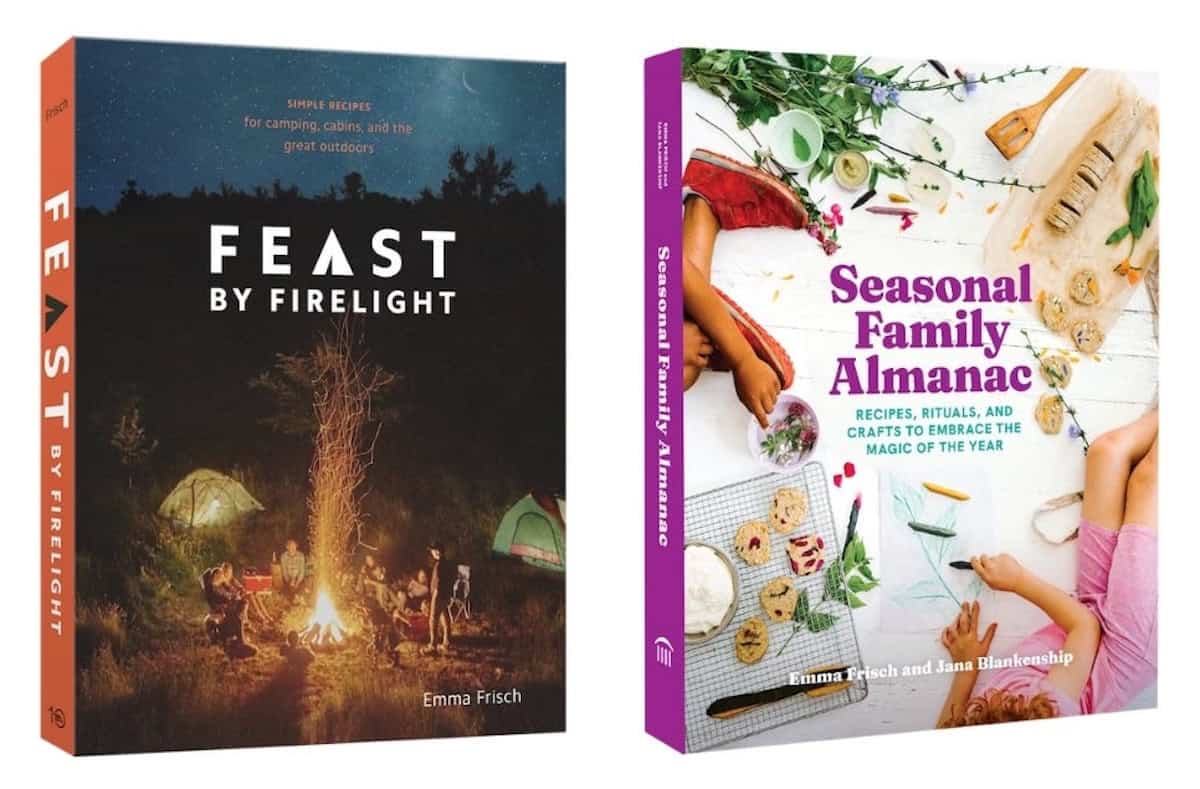
A. I worked towards writing a cookbook for 8 years before I got my first deal for Feast By Firelight: Simple Recipes for Camping, Cabins, and the Great Outdoors. As with most things in life, the timing was right. I had just competed on America’s #1 reality cooking show at the time, Food Network Star, and at the same time, opened a glamping resort, Firelight Camps, with my husband. When we opened, I felt like I finally had a space to bring my passions together: the outdoors, community, and cooking.
As a result, I began cooking over fire regularly for guests, special events, and our family between shifts. A local book agent who knew a fellow contestant from the show caught wind of what I was doing and wanted to help me pitch a cookbook to Ten Speed Press about cooking wild foraged food over a fire. They loved the idea but wanted to streamline it towards camping, and the resulting proposal was for Feast By Firelight.
Writing a cookbook is a labor of love. It doesn’t pay well and it’s a lot of work. But as soon as I began writing the first, I knew this was a calling for me, and I immediately began dreaming of a second.
In 2023, I published Seasonal Family Almanac: Recipes, Rituals, and Crafts to Embrace the Magic of the Year. This book is very close to my heart. It's divided into 12 chapters that follow the micro-seasons (I.e. early fall, mid fall, late fall). Each chapter contains recipes for food, wellness and care, and crafts that use seasonal ingredients and materials, or take cues for the season. For families yearning for a closer connection to nature, this is a simple primer that will become a cherished family companion.
Q: How would you describe the regional cuisine where you live? Are there fresh food markets or farmers’ markets available? Do you grow your own food?
A: I like to say that in the Finger Lakes Region of New York, “local food is not a trend; it’s an age-old way of life.”
The fertile conditions make this region ideal for growing a wide range of fruits and vegetables, and there are many farms ranging in size throughout the region. The deep lakes and the microclimates on their shores allow for a thriving wine industry referred to as the “Napa Valley of the East.” Apples also thrive here, and there is a burgeoning cider industry. There are plenty of small, local farmers markets alongside the iconic Ithaca Farmers Market, one of the largest and most beautiful in the country! There are also many wild food foragers in this region, and we love cooking with wild ingredients.
I live in an area where deer run rampant, and we don’t have a fenced garden. Instead, I collect wild berries from our land for jam and shrub, wild herbs for tea and cooking, and grow loads of garlic, which the deer don’t touch!
We are members of a CSA share, Full Plate Farm Collective, which is essentially a subscription to a collective of farmers who provide a weekly distribution of fruits and vegetables. I supplement our share with basics from our local grocery store, which carries locally-grown and made products like milk, eggs, and flour.
The cuisine is as you’d expect in America - it varies by household! There are some staples of the region, but none that have imprinted on me.
Q: Is there anything about your kitchen that you would like to change or improve on?
A: I would love to knock a wall down and connect my kitchen with our living room. I’d love to share the space with my children (instead of hollering back and forth about who comes where to help with what), while being able to keep an eye on the stove.
Q: What tips can you give us that will help keep our kitchens neat and tidy and easy to manage?
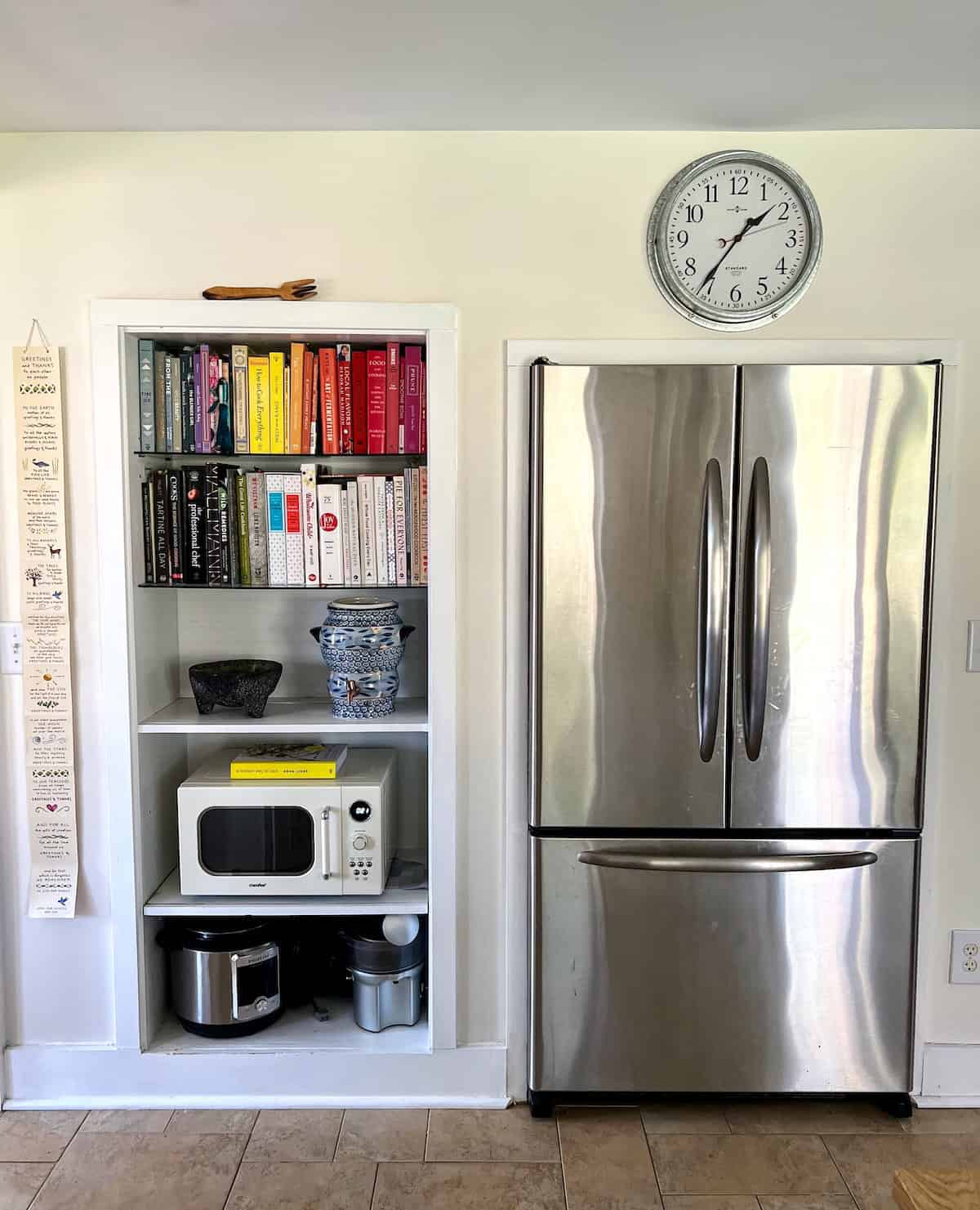
A: I always suggest people organize their pantry and fridge/freezer first (here’s a quick tutorial on dialing in your pantry). We often have products that are expired or simply never used, from a recipe that required an exotic ingredient we never used again. We actually need far less ingredients than we think we do to make a delicious, nourishing meal.
I encourage people to have on-hand the ingredients they know and love, and feel comfortable cooking with. There’s no need to have 50 spices and herbs - they won’t maintain their flavor in a bottle tucked away in a cupboard. In Italian cooking, I use a handful of spices and herbs, primarily thyme, rosemary, oregano, sage, bay leaves, and dried chili peppers.
Another strategy that helps me keep a well-organized fridge is to subscribe to a farm share, or CSA (community supported agriculture), which I explain in this post. After working through a week's worth of produce, I end up with a fairly empty fridge, and start over when I pick up my new weekly share. This also ensures I'm always cooking with fresh ingredients!
Q: How many cookbooks do you have and do you have any favourites that you use time and again?
A: I used to have a very large collection, which I paired down when I moved three years ago. I probably have around 40-50, which I like to have available for referencing or inspiration, but I actually only use 3-5. And even those I rarely use to follow a recipe, but rather to cross check a technique or get inspiration. One of my favorites is Alice Water’s The Art of Simple Food.
Q: Do you have a favourite recipe that you would like to share with us?
A: Two of my absolute favorites are Classic Italian Meatballs with Spaghetti (my go-to comfort food) and my mother’s Almond, Polenta, and Honey Cake.
Thank you for sharing your Kitchen with us, Emma. Visit and Subscribe to Time for Dins
Comments
Post a Comment