Q - Hello Mecca. Can you please tell us about yourself, where you live and your substack publication?
Image by Mecca Bos
A - I’m a longtime Twin Cities based food writer and chef. I specialize in telling stories about marginalized communities and spotlighting people and projects that mainstream media might have overlooked or ignored. My Substack covers the work of my nonprofit, BIPOC Foodways Alliance, an organization dedicated to antiracism work using food as a tool. For paid subscribers, I offer cultural commentary, travel notes from our journeys around the world, dining recs, and little stories from my home and life.
Q - Can you please describe the layout of your kitchen, how much of a role it plays with your family, and when writing for your BIPOC Foodways Alliance Newsletter?
A - Our kitchen is not the largest in the world but it’s highly functional. We have a butcher’s block in the middle of the kitchen, and a computerized refrigerator that people are always in awe of (though I don’t really know how to use most of its functions but I do know that it plays music). I share this kitchen with my partner, chef and Indigenous food sovereignty activist Sean Sherman. He is the true chef of this kitchen, but sometimes he lets me in 🙂
I spent the past year doing recipe testing for his upcoming cookbook Turtle Island in this kitchen, and we regularly host BIPOC Foodways Alliance related functions out of our home. This kitchen sees a LOT of action between our professional, family, and social endeavors–we host most of the dinner parties in our friend groups, and we make a good team doing it. We both truly love cooking and hosting.
Q - What are your most used kitchen gadgets and kitchen gear that you cannot live without?
A - Now that I have a VitaMix I have no idea how anyone lives without one. While I am truly a “make-do” kind of chef, able to get by with very few gadgets and fancy items, but I’m here to say that a VitaMix will elevate anyone’s kitchen to a more pro level. Other than that, I can’t cook without good music, an apron with a kitchen towel draped over the belt, and Crocs, which make long days standing in the kitchen tolerable.
Q - You spent many years writing about restaurants. Can you tell us about this and how this came about?
A - I graduated from college with an English degree wanting to write prose. Just as my advisor warned me, there’s no career track for that, so journalism provided me with a base to make a living. And yet, I still had an urge to do something else. After work, I’d kick off my shoes and pore over cookbooks. Cooking was the thing that really charged me up, and eventually, the two loves converged. I worked for about a cumulative decade at two different city magazines covering food, and since then I have freelanced extensively. I’m also an audio journalist, and I have spent more than 20 years in the professional kitchen.
Q - How and why did you pivot from writing about restaurants to writing stories around food and culture?
A - Even when writing about restaurants, I always had my ears pricked about stories from “underdogs.” The bigger media outlets were often writing predictably about flashy concepts from big-name chefs. Unsurprisingly, those big-name chefs were rarely women or people of color. As a Black woman chef, I rarely saw people who looked like me getting covered in food media, especially in Minnesota. But I knew that Minnesota was steeped in culture beyond Eurocentric dining– we have the largest Urban Hmong population in the world, and the largest Somali population in the country, for instance. I got curious about what their food stories were, and it opened my eyes to all of the other cultural food stories that are right under our feet. As my point-of-view evolves, I wanted to know what stories we were overlooking when we focus solely on restaurants. Turns out, a lot. Women are the rulers of the home kitchen, and the home kitchen is where the most important (and often most interesting) work of feeding people gets done, in my opinion. These stories hold deep meaning and are crucial for understanding shared humanity. Documenting, uplifting, and preserving these stories is now my life’s work.
Q - How would you describe the regional cuisine where you live? Are there fresh food markets or farmers’ markets available?
A -We live in the Upper Midwest with six months of winter. Upper Midwestern cuisine can be difficult to define– I grew up in a “meat and potatoes” family, with a butcher and avid fisherman for a grandfather. In the summertime, we lived on lake fish, sweet corn, and refrigerator pickles made with homegrown cukes. But since partnering with Sean, it’s impossible for me not to look at our regional cuisine without an Indigenous lens. Minnesota was first stewarded by the Dakota, and the true foods of the Upper Midwest include ingredients like game, lake fish, hand-harvested wild rice, local squashes, berries, corn, maple, turkey and duck. Sean grows a large garden in our front yard, and we enjoy bumper crops of tomatoes, cucumbers, chiles, and lettuces in the summer. I help out by making sure I eat at least one tomato sandwich per day.
Q - Is there anything about your kitchen that you would like to change or improve on?
A - We let our refrigerator leak on the wood panel flooring for too long and now the floor needs replacing. That would be nice. I believe in using what you have to get almost any cooking job done, so my kitchen is far more equipped than anything I could ever dream of. I’m grateful!
Q - What tips can you give us that will help keep our kitchens neat and tidy and easy to manage?
A - Wash your dishes as you go. My kitchen is always 90% clean by the time the meal is served. This came from many years cooking in tiny kitchens, or pro kitchens without dedicated dishwashers. This practice is muscle memory for me and I couldn’t turn it off if I wanted to. No cooking project is finished until the kitchen is clean. The end.
Q - How many cookbooks do you have and do you have any favourites? Have you written any books?
A - We probably have a couple hundred cookbooks. Not a comprehensive library by any means, but Sean receives a lot of newly published books in the mail, making us very lucky. My favorites are anything that inspires me as a Black woman chef, including The Jemima Code (and anything by Toni Tipton Martin, who is a goddess,) The Taste of Country Cooking by Edna Lewis, The Dooky Chase Cookbook, by Leah Chase, the grande dame of New Orleans cooking, and anything weaving in West Africa, my ancestral homeland. I’m in the process of working on a book proposal that explores the evolution of Soul Food for a modern (and changing) America.
Q - Do you have a popular recipe or food story that you would like to share with us?
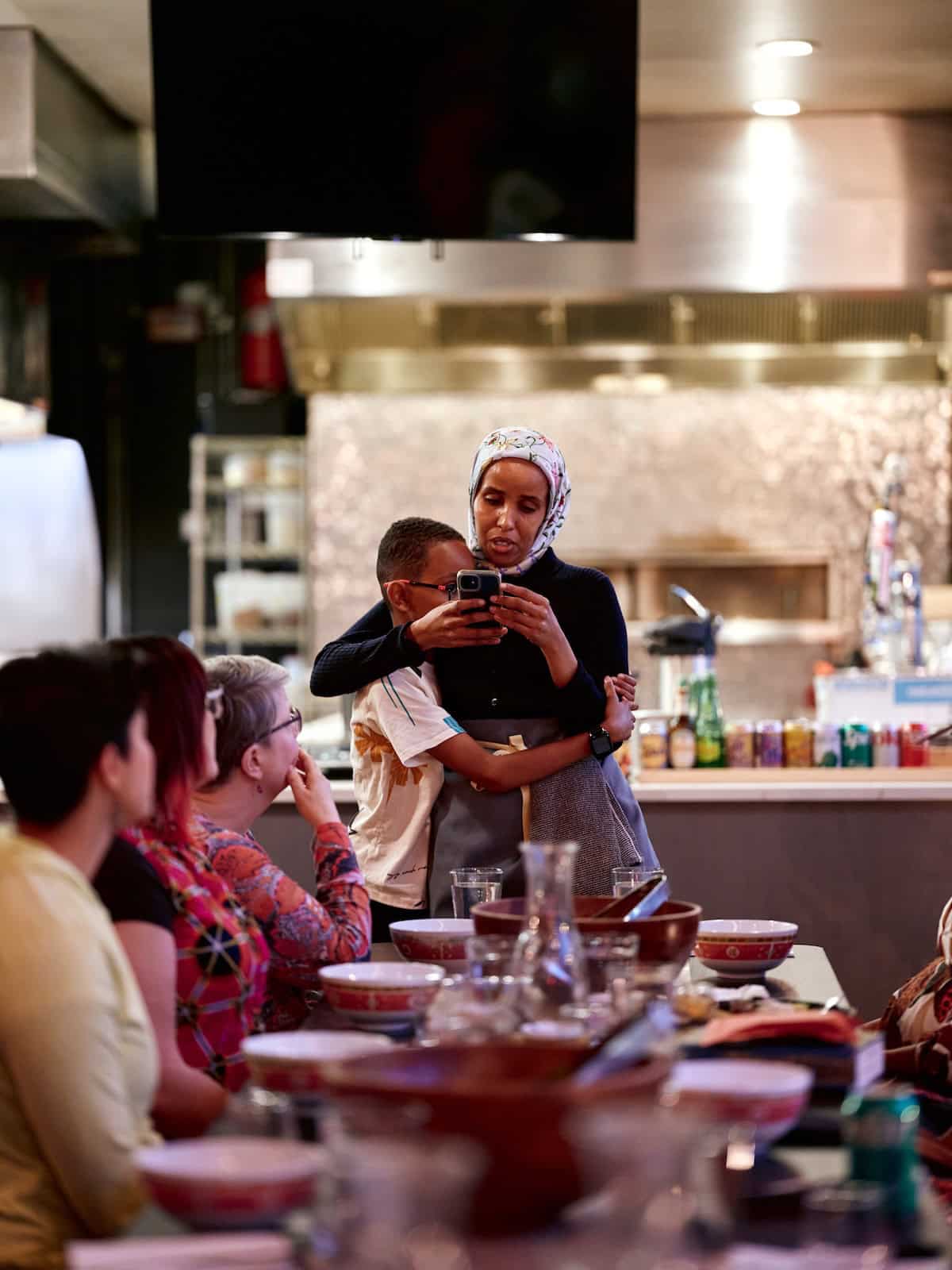
Muzamil and Maryan, Photo: Uche Iroegbu
A - Right now, I’m proud of the work that we are doing with BIPOC Foodways Alliance, capturing the stories of women home cooks from many cultures. We host dinner parties where these women (and sometimes men who learn from women) present their cultural legacy menus to a group of intentionally diverse guests. We then document these stories using videography, photography, and writing. Here is a link to a recent story about Maryan Abdinur, an excellent home chef, Somali immigrant and proud Minnesotan.
Q - Have you had any kitchen disasters that you can share with us?
A - I was catering a drop-off dinner order. I went to pour hot soup into a coffee carafe so that I could transport it, and the entire carafe exploded into a million pieces, sending shards of stainless steel all over the place (and not to mention hot soup). Miraculously, I wasn’t hurt, and the show had to go on, so I closed the door on the entire mess, stopped at a gourmet store on the way, bought a serviceable substitute for the soup, and chalked it up to the chaos of catering.
Step into Other People's Bookshelves: Q&A with Julie McCoy, to discover some of her favourite books and the authors she would love to meet. Q - Hello Julie. Can you please tell us about yourself and your publication? Take a peek inside Julie's kitchen in this series, Other People's Kitchens. A - I have been writing short stories, plays, and essays for over 40 years. I have published two books, Get in the Car: A Food and Travel Memoir , as well as a collection of short stories, The Camp People . Both are available on Amazon. Currently, I write “ Something Tasty ” food-focused short stories on Substack. I’ve also finished a new novel, Randy & Rini , and am looking for a literary agent to run like hell with it to a publisher! Q - Please tell us about your bookshelves and cookbook collection, what they consist of, and how many do you have? A - I have about 50 cookbooks as well as food/gardening/wine-related books. I also have m...
Dive into Other People's Bookshelves, Q&A with Cheryl, Queen of Markets. and discover her favourite cook books old and new and the authors she has met and would love to meet. Q - Hello Cheryl. Can you please tell us about yourself and your substack publication? A - My substack is called Queen of Markets . I have a background of running farmers markets and a quirky interest in food history, food stories as well as food policy, sustainability and of course markets. Some of you may have read my recent piece, Never trust the Brownie Cookbook which was a joy to write for The Foodstack Library. Q - Please tell us about your bookshelves and cookbook collection, what does it consist of, and how many do you have? A - I’ve never counted my cookbooks; perhaps I should! They’re in two places. In my kitchen there’s a static and changing selection of books I turn to most often. They’re the books that have earned a lick on gold star whilst the ones in my library...
Q: Hello, Suzy. Can you briefly introduce yourself? A: My name is Suzy Valtsioti. I'm a writer, an artist and a foodie. I love to grow my own veggies and fruit. I write a substack publication called Sosanni Valtsioti in the Kitchen Q: How would you describe the layout of your kitchen, its history and how it was designed? A: This is a newly built house, so the kitchen is 2 years old! It is a long kitchen, it’s quite big and very simple. It has a farmhouse feel to it, and the windows look out onto the garden and the patio. It has 2 long counters and a kitchen table in the center. I have 2 armchairs near the patio balcony doors. I used to have them both facing outdoors - but I whimsically turned one around to face the kitchen - so I can keep an eye on everything and watch the TV from the armchair. I get a lot of reading done there! Q: How much role does your kitchen play in your family's life, entertaining, writing, and testing recipes for your newsletter? ...
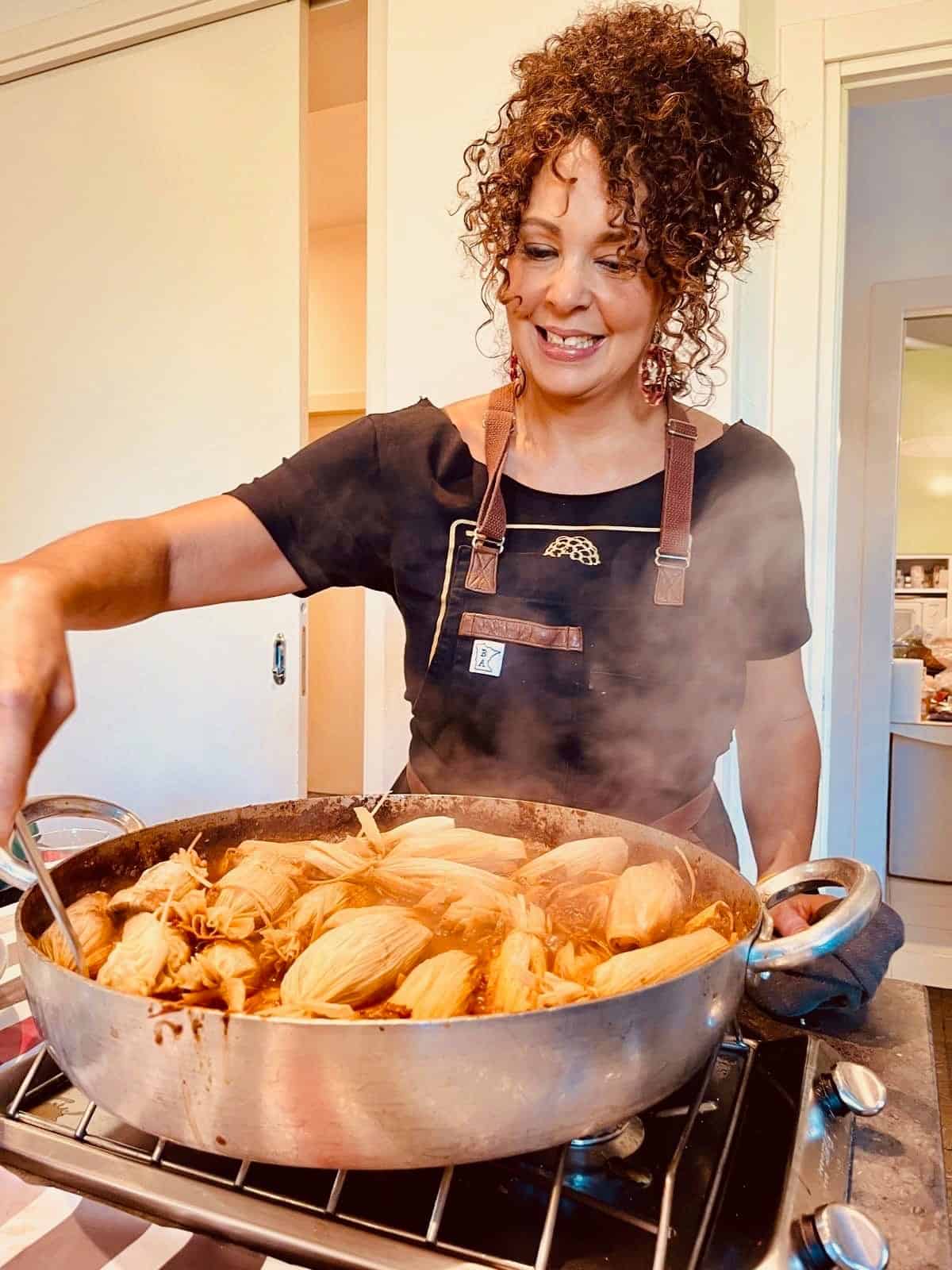 Image by Mecca Bos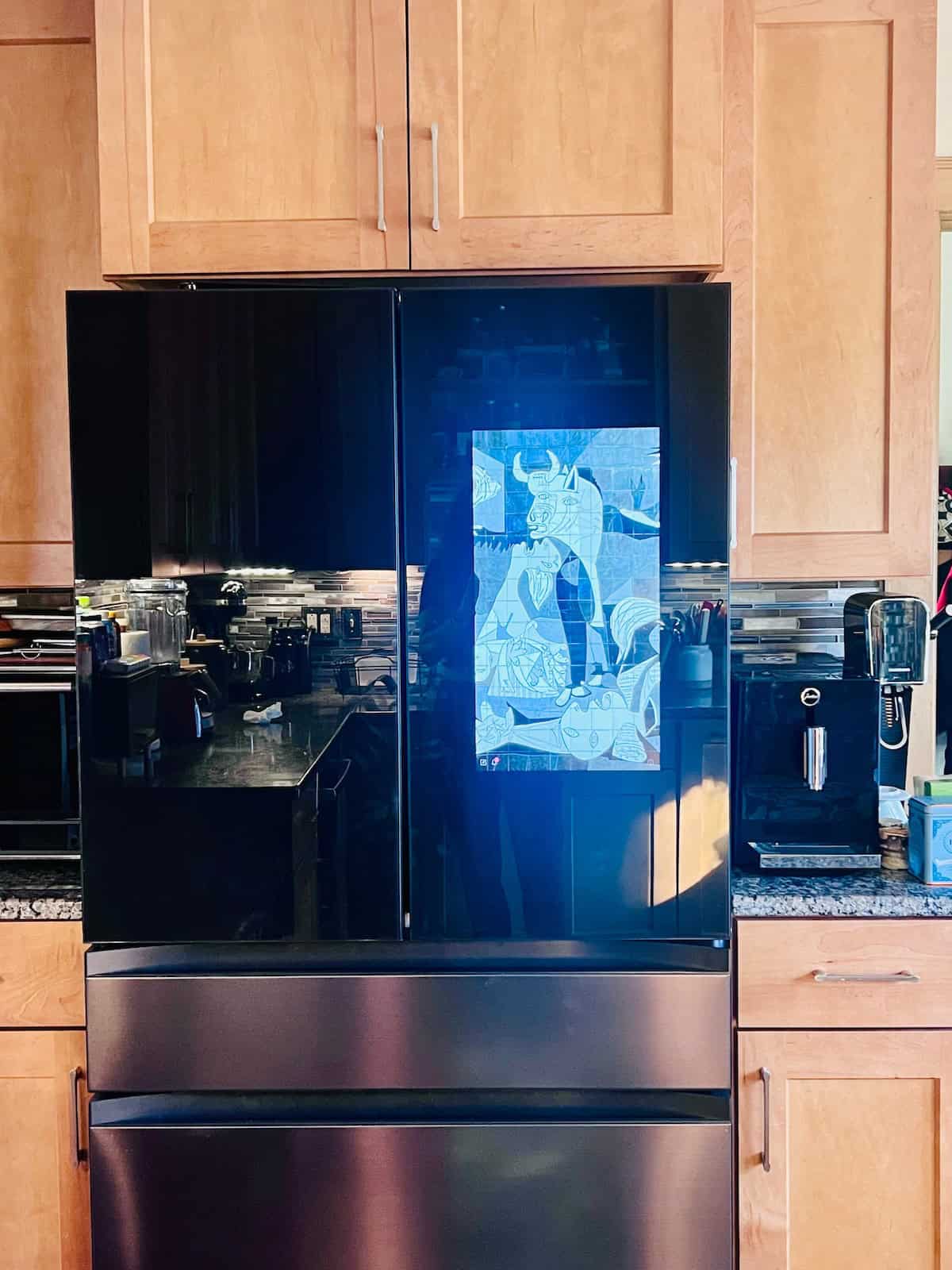
Comments
Post a Comment