Q - Hello Alex. Can you please tell us about yourself and your Substack publication?

A - I’m a self-taught cook living in Edinburgh with two adult sons who come and go like the wind. Their seasonal college and university timetables mean my wife and I are constantly adapting around meal times. A wannabe cook and writer, I’m learning in public through my Substack publication, Scribble and Scran, which began as a creative experiment and has become a space to share my thoughts on food, life, and everything in between.
Over time, I’ve grown not only as a cook but also in consistently showing up as a writer. For me, Scribble and Scran is about exploring how food serves as both a creative outlet and a way to connect with others, focusing on the context in which food is made rather than just offering a list of recipes.
The publication also reflects my personal journey with food, including my shift toward a more intentional, flexitarian approach. I share stories, recipes, and insights from my life, whether I’m cooking through family traditions, writing about food experiences while travelling, or learning new techniques along the way.
For more, feel free to explore the About page to learn more about Scribble and Scran and the path I’m taking.
Q - Please tell us about your cookbook collection, what does it consist of and how many do you have?
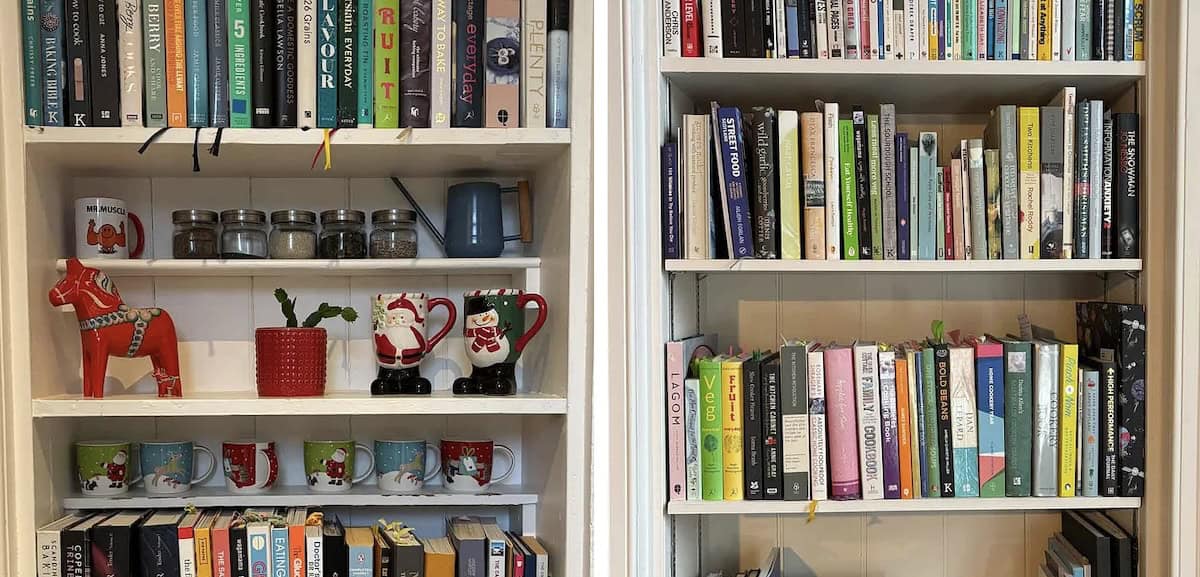
A - Is "too many to count" a valid answer? Or maybe "too many to admit"? My collection is my guilty pleasure, just shy of 160 (I roughly counted them as part of this process).
I think it harks back to the days when we had record collections, except for me it’s cookbooks. I know Vinyl has come back for some. I still have a few soundtracks and a drawer full of CD's, however the format has long since given away to Spotify for me. I miss having something physical to hold, turn, dream and think with. Books provide that magic, as well as buying my own and seeing what pops up in the Oxfam bookshop and the library....there is always the easy win for a Birthday or Christmas present.
Regrettably, I don't have a record player anymore...I've promised myself I'll get one again, it just never seems to be a priority. Whereas I have a hob, an oven and every day we need to play a tune. Sometimes it's a long slowie played at 33rpm, other times, we need to crank it up and turn something round at 45rpm.
It's a long way round of saying my cookbook collection is an expression of my cooking/music tastes. It's matured as I've become a better cook, understood the music more and become a little bit more discerning when it comes to the next pick.
Q - Which cookbooks do you love and use the most and why?
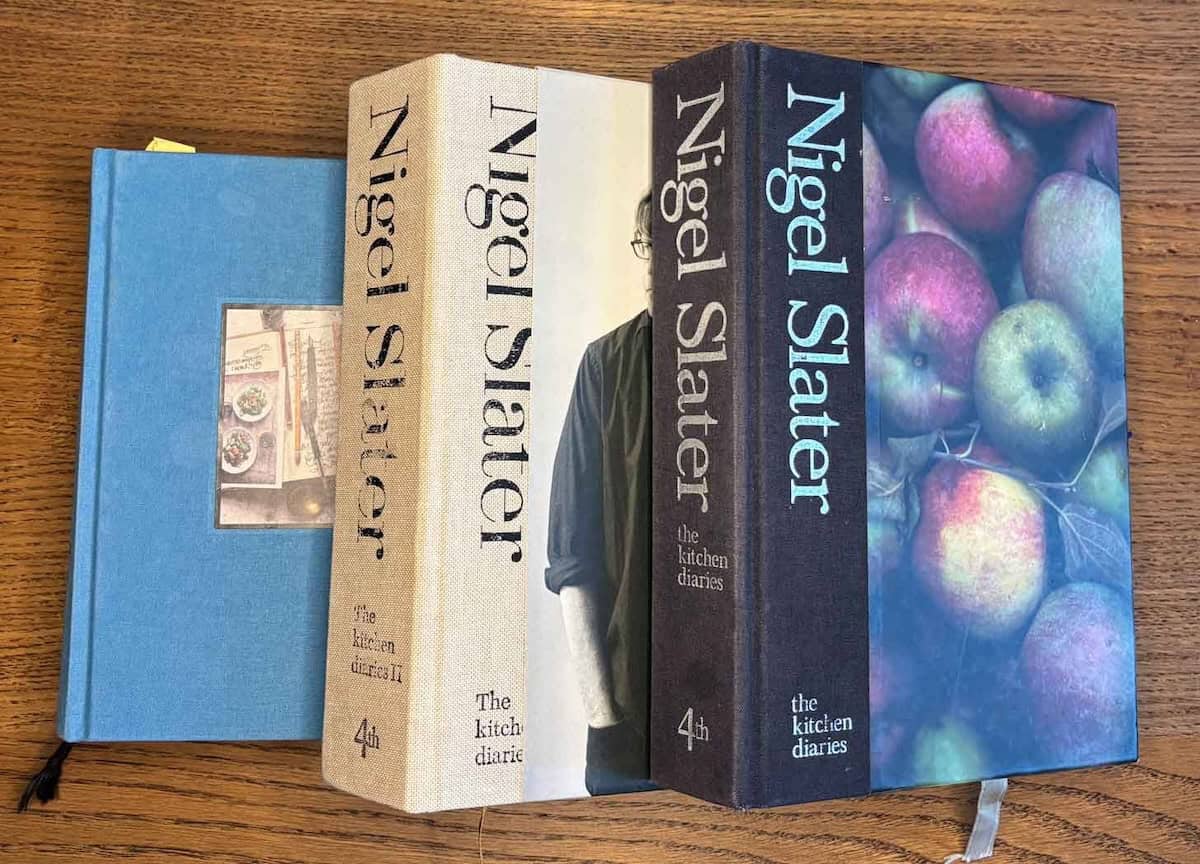
A - The Kitchen Diaries spring to mind by Nigel Slater as my most used. I love cooking by season, and as a way to help me choose in a world where there is so much choice, I can pick the date and flick through 10 or so recipes that I might have done before or might want to attempt now that I'm a little more skilled.
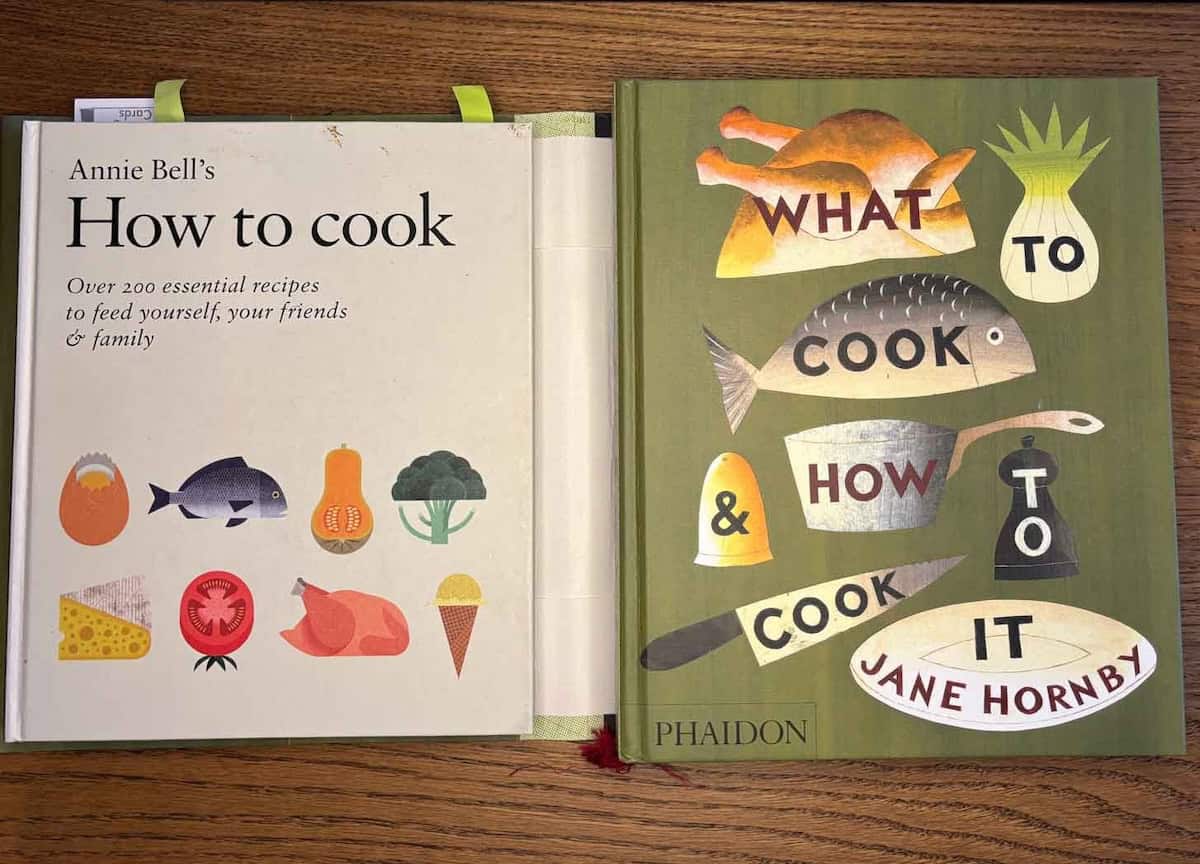
A couple of "how to cook" books have really been the backbone of my cooking: Annie Bell’s How to Cook and Jane Hornby’s What to Cook and How to Cook It. The latter appeared under the Christmas tree, covered with a montage of photos of the boys and labelled D and C’s Big Cook Book. It was my sneaky attempt to get them into my hobby, and the book’s step-by-step pages are just brilliant for anyone starting out.
Thanks to being raised at the table, both boys can cook if they want to, although they’re showing no real interest just now! Still, I look forward to the day when they host Christmas!! I’ll happily sit back and enjoy the results. Like we say in this house, it’s always nice to be cooked for.
I asked my wife what she thought might be my most used and she pointed out there might be a difference between most thumbed versus used. I nearly got accused of having too many to have a most used! She called out Nigel's books for me of her own accord and then we entered into most used for her, which is Persianna by Sabrina Gaylor, The Slimming Foodie by Pip Payne and some of the Fast 800 recipes, which keeps us on an even keel midweek recipe wise.
Over time, I’ve gravitated towards cookbooks that tell a story or reflect a writer’s passion for a particular subject. It’s not just about recipes now, it’s about learning something meaningful from the pages.
Q - Can you remember your first cookbook? What was it and do you still have it with you?
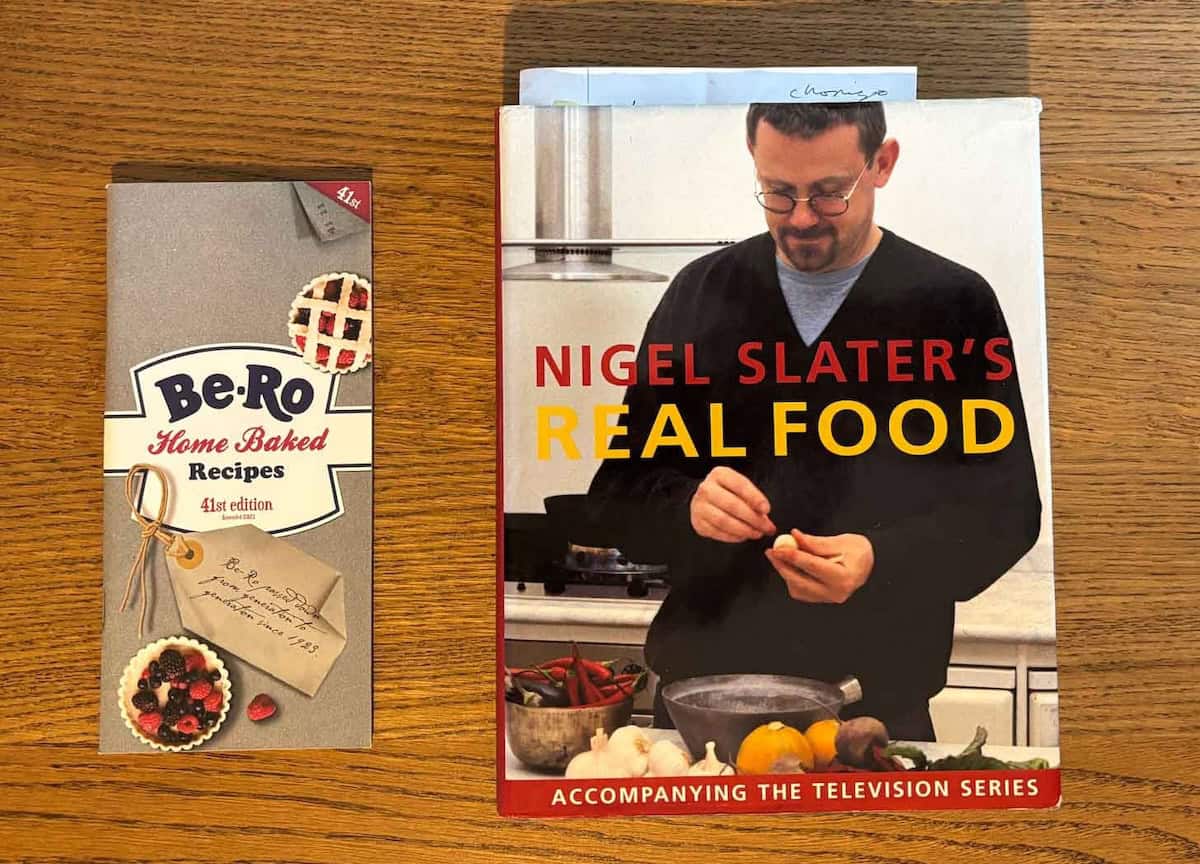
A - The first book I remember referencing as a boy was the Be-Ro book that sat in the drawer of requirement, mainly for the pancake recipe I wrote about once in one of my posts. Then there was the book I bought in my placement year at university, a bargain supermarket special that I no longer have. As a 19 year old, I wanted to do better in the kitchen and this one lured me into trying to make Lasagne without the skills or the time to do it! Later on a step-by-step good housekeeping saw me right and now it’s one of those recipes I make from my head.
Then it all really changed in 1998, when Nigel Slater brought out a TV series called Real Food (still available on More 4). My wife and I had just moved in together and we'd watch this wonderful cooking program on our 14" portable TV. It made me feel like I could become a better cook and with a recipe book that sat alongside the series. It introduced me to cooking chicken with wine. The idea of breaking sausages down, combining with orecchiette and cream to form an amazing pasta dish. And the chocolate espresso cake, that I would roll out for dinner with friends!
Q - What system do you use to organise or file your books?
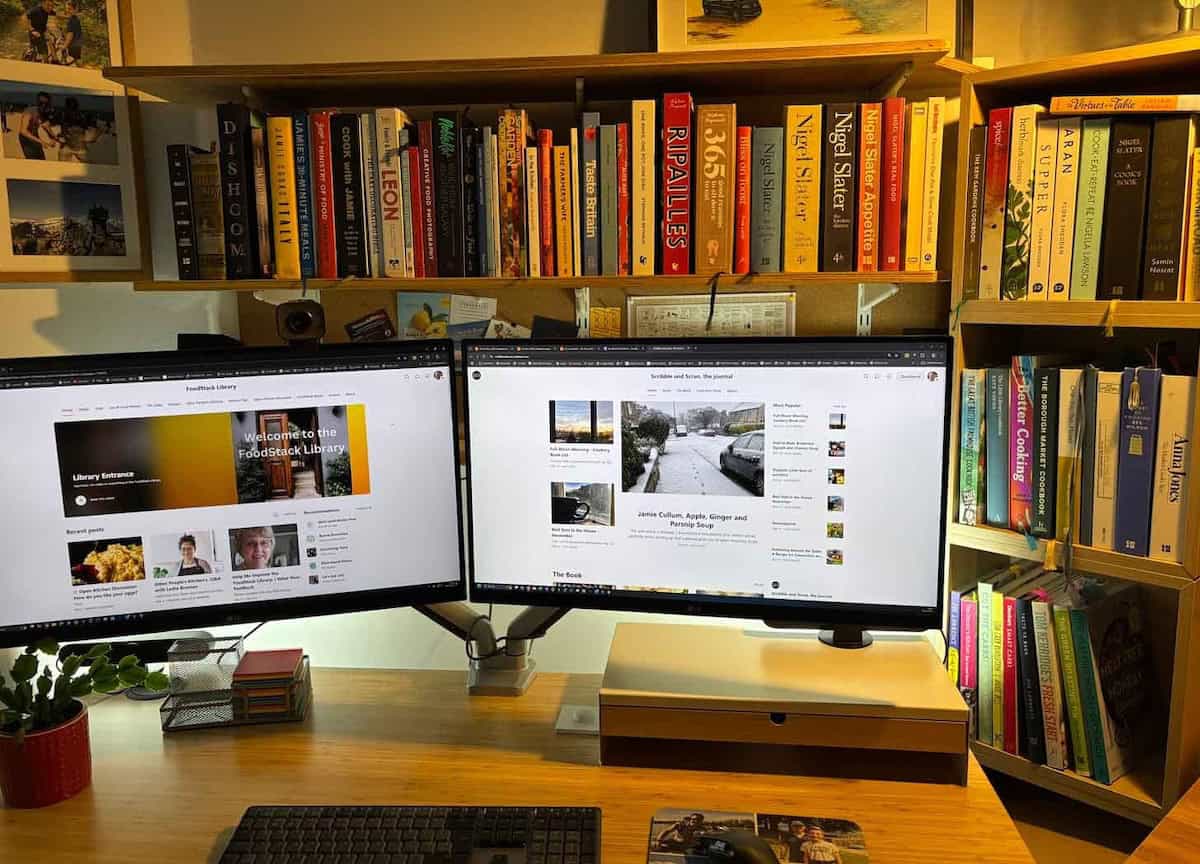
A - Edinburgh houses often come with these wonderful built-in wall inserts called Edinburgh presses. Some still have their doors, while others are open shelves. We have a particularly handy one in the kitchen that holds our most recent or popular books, and there’s an overflow press upstairs. I’ve also built a set of shelves around my standing desk to house even more of the collection.
This question sparked a few complaints from the kitchen as I realised it was time to up my game in organising my books! The process involved some overdue shuffling, grouping, and generally making things more presentable. Things have come upstairs when they shouldn’t have!
On a day-to-day basis, they’re loosely grouped by author and sometimes by how new they are. I also try to protect certain favourites from the summer sun that hits the kitchen shelf, though most books inevitably pass through there at some point.
That said, they do have a way of wandering, gravitating between the kitchen, the bedside table, and the island, depending on what I’m working on or reading. It’s not unusual for me to head downstairs, convinced the book I need is in the kitchen, only to find it was right behind me the whole time.
Q - What is your oldest Cookbook and when was it published?
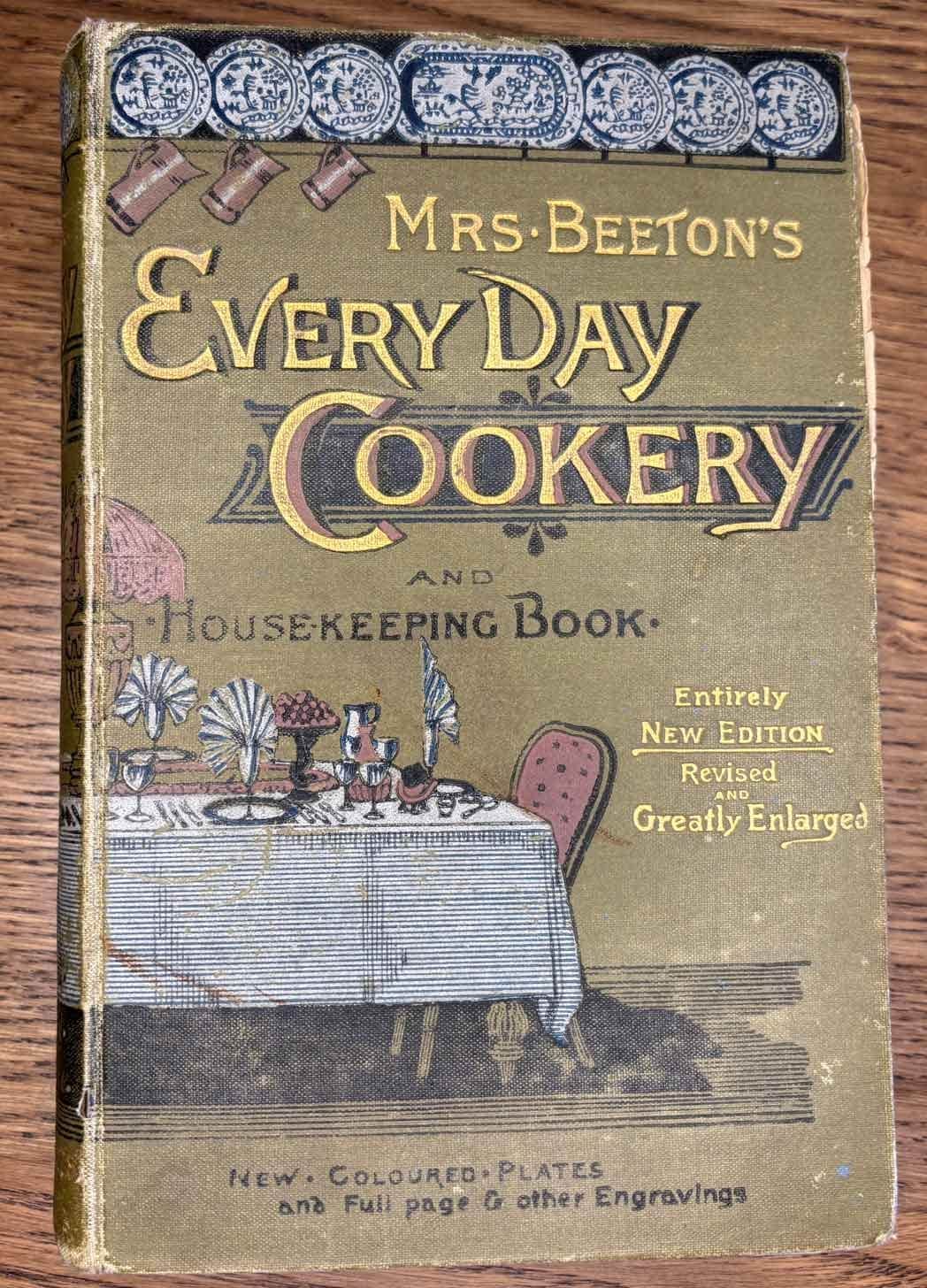
A - The oldest cookbook we have is Mrs Beeton's Every Day Cookery (New Edition), published sometime around 1890. There’s no date on the about page, so it’s hard to pin down exactly, but it came to us through my father-in-law’s mother. I managed to rescue it during a downsizing, along with a couple of other gems: Bee Nilson’s Penguin Cookery Book (1979) and Delia Smith’s Christmas (1990), a joint present from my wife and brother-in-law to their mum.
Q - Which cookbooks would you recommend and why?
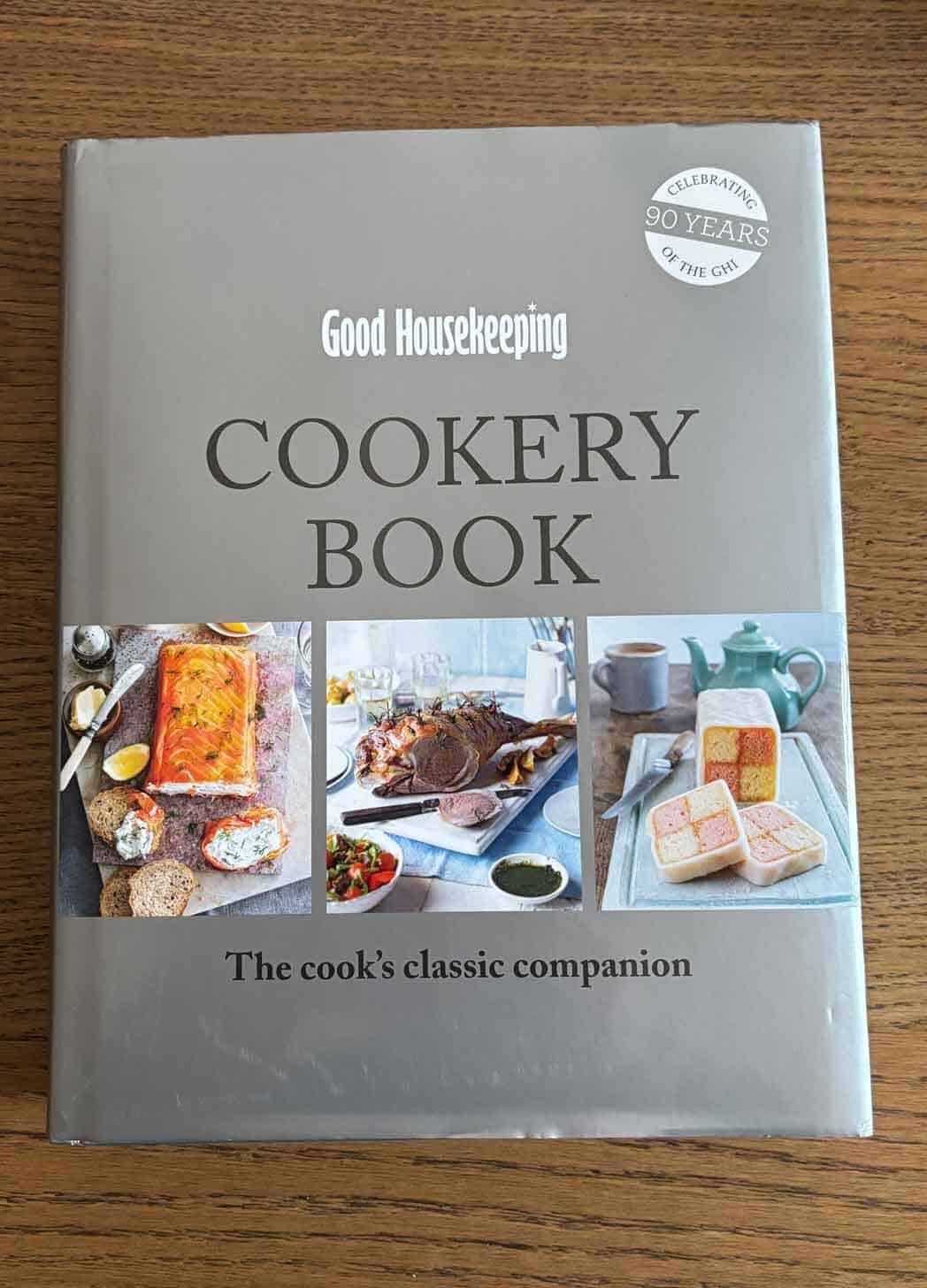
A- I think everyone should have a classic companion, like The Good Housekeeping Cookery Book. For anything traditional, whether it’s rice pudding or a rich fruit cake, it’s in there. In a world of Google, you might wonder why, but there’s something comforting about having an encyclopaedia-like guide at your side without worrying about a screen going blank.
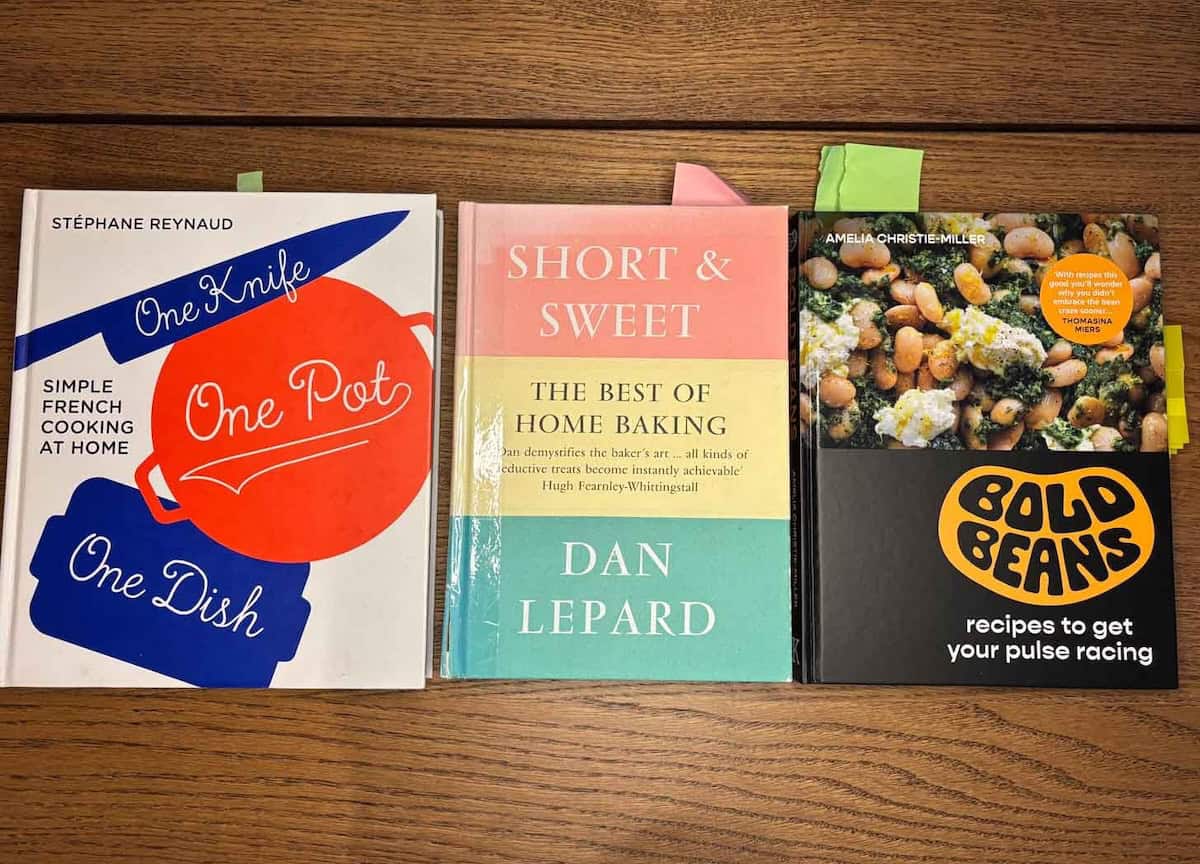
For baking, Dan Lepard’s Short & Sweet is a must. It’s full of clear, approachable recipes that simply work.
For meat dishes, Stéphane Reynaud’s One Knife, One Pot, One Dish is a go-to. The recipes are simple, forgiving/adaptable. They are heavy on slow cooking which is perfect for my lifestyle, where I can throw something in the oven for a main meal and then enjoy leftovers the next night.
For a vibrant alternative to meat, Bold Beans by Amelia Christie-Miller is fantastic. It’s full of creative recipes that feel like an antidote to traditional meat-based meals and a step towards a more plant-forward world.
Finally, Annie Bell’s How to Cook is one I always recommend. With over 200 recipes, it’s the book I wish I’d been given when I left for university. It’s straightforward, practical, and perfect for building confidence in the kitchen.
Q - Which cookbook authors have you met or would you like to meet? Tell us about them.
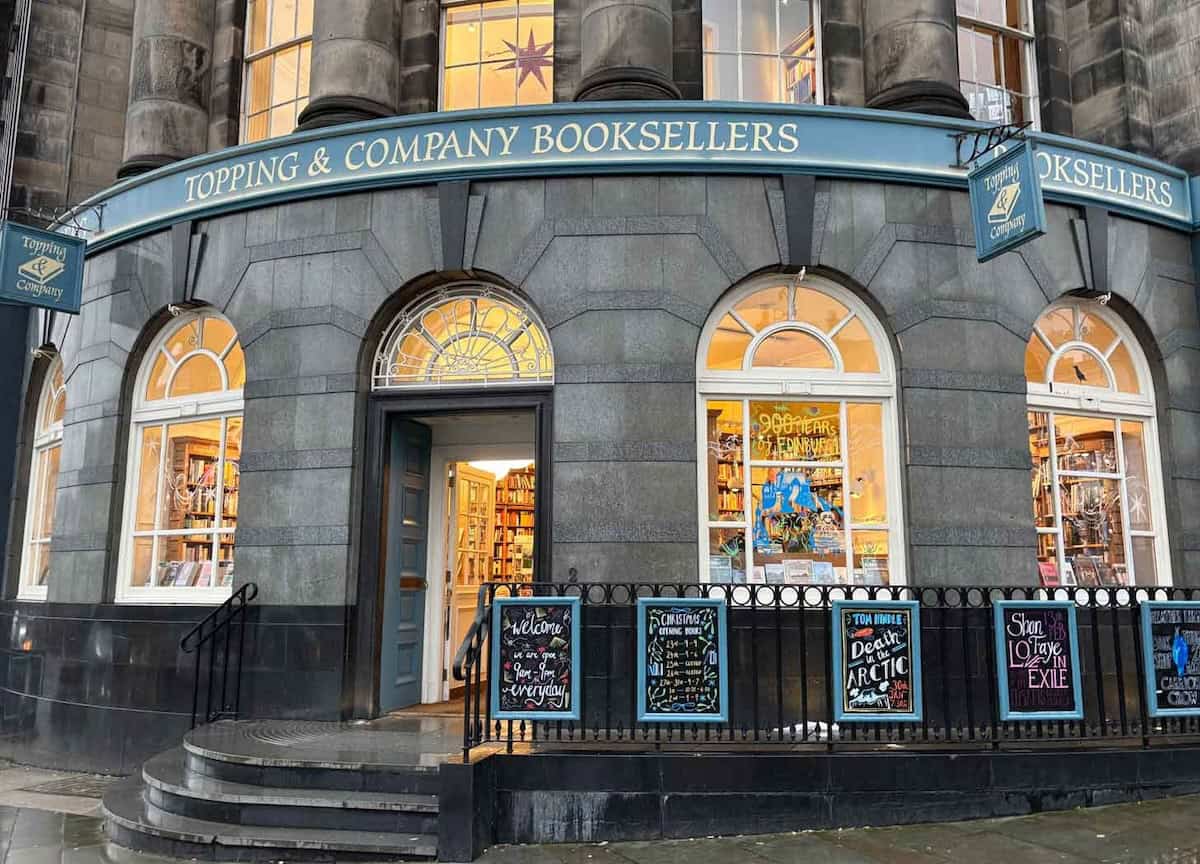
A - I'm lucky to live in Edinburgh, which has an independent bookstore that's very good at getting authors to pass through town. I've been to see Anna Jones as she launched One Pot, Pan, Planet, Sabrina Gahlour for Flavour and Nicola Lamb for the launch of Sift.
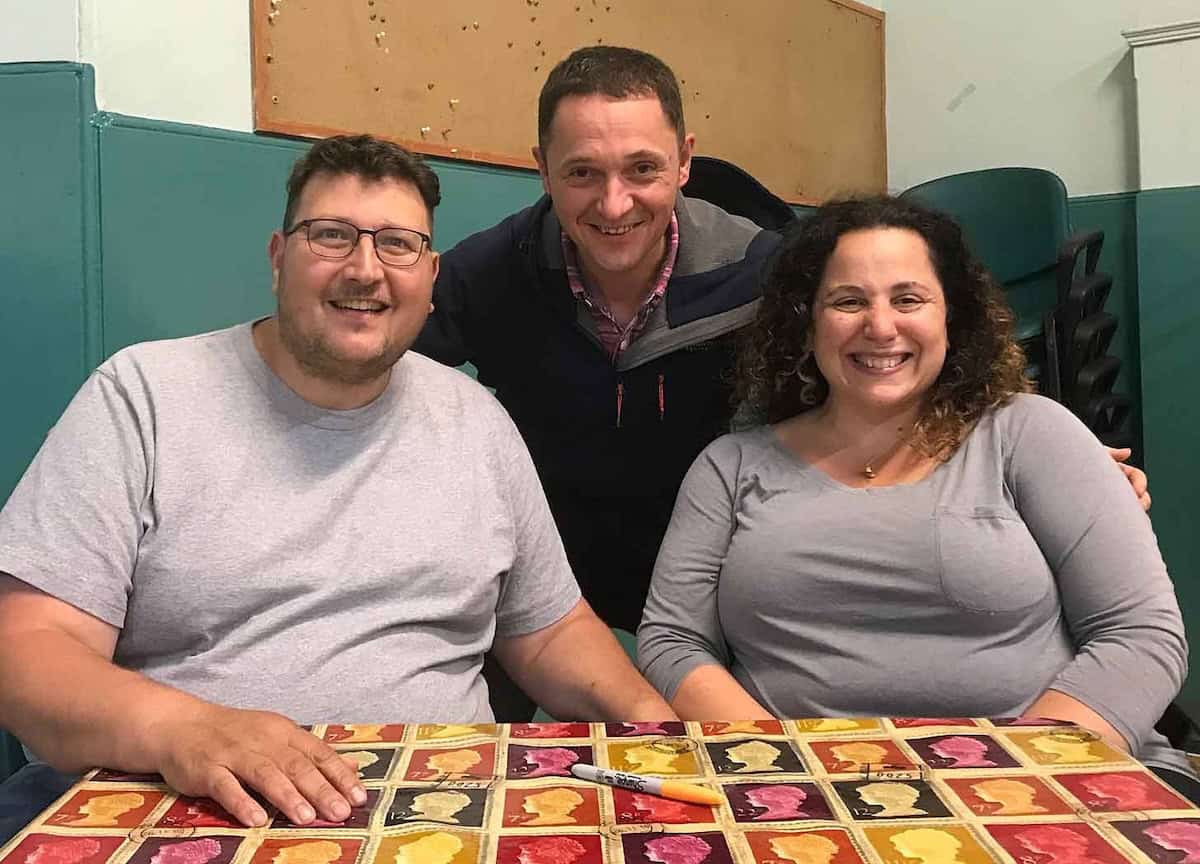
In a similar vein, Honey and Co came to launch Chasing Smoke. Afterwards I met both Sarit Packer and Itamar Srulovich. So friendly and welcoming and then I joined Itamar Sruleovich on one of his cookery writing courses over zoom.
I'd really like to meet Nigel (obviously!), I'd like to thank him for the journey that he took me on. I know he’s an introverted kind of fellow and doesn't need another fan waving in his face. I appreciate he's not that kind of guy. I do roll out his cured salmon every year and his ham with butter beans was a regular staple during the boy’s pirate period, where ham night was a must.
He once did a TV programme where he visited folks' and cooked with them. I'd have liked to have been one of those people who had an interesting tale to tell or an old family recipe to pass on which we’d humbly cook. I’d make sure not to ask him what his favourite food was, but would discuss crisps and whether he’d come across seabrooks.
Q - Are there any rare or special editions in your collection?
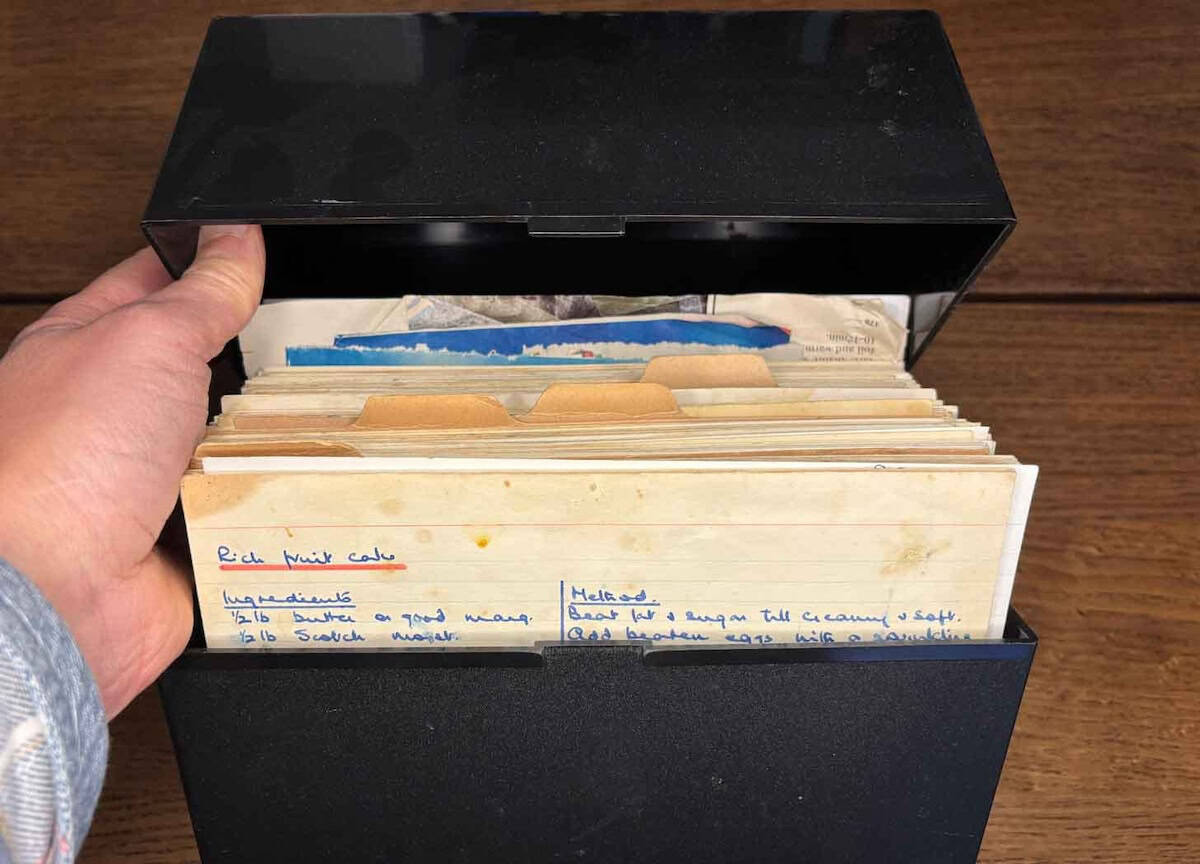
A - Not really a book of sorts, we have the black box of index cards passed on from my wife's mum, some are treasured recipes, others not so, more recipes she might have wanted to try one day or had at a neighbours, passed on from a friend like an old scroll never to be touched again.
Optional Question - Is there anything else you would like to add about your bookshelves and book collection that I haven’t asked?
A - In terms of plans for my collection, there should be a one in one out policy, in fact I think there is!! I just managed to find ways around it! My plan for 2025 is to lean into the books I have more often. I want to consolidate around a bunch of favourites and take everyone on that journey.
Thank you Lynn for running this, I’ve really enjoyed the time to reflect on my collection of cookery books. I’m so looking forward to seeing this series progress with other folks from the food stack library.
Visit and subscribe to Alex's publication - Scribble and Scran, the journal. The ramblings and adventures of a cook, living in Scotland.
Archive Collection: This post originally appeared on Foodstak. It has been moved here to The Foodstak Legacy Files to be preserved as part of our community archive. For my latest baking recipes, come visit me at Foodstak.com
Comments
Post a Comment